Category
607 places
Your location is only used in your browser to sort nearby places; it is never stored.
607 places listed
Mosque
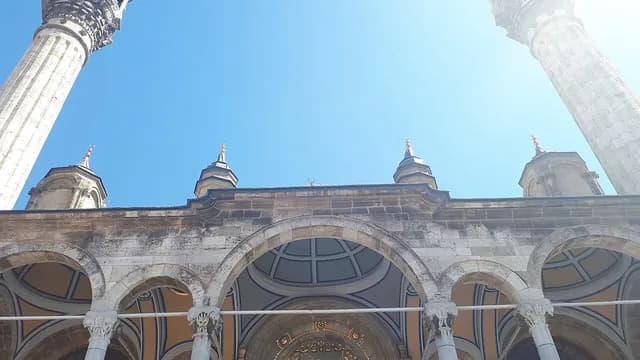
Adeyze Mosque
Merkez, Afyonkarahisar
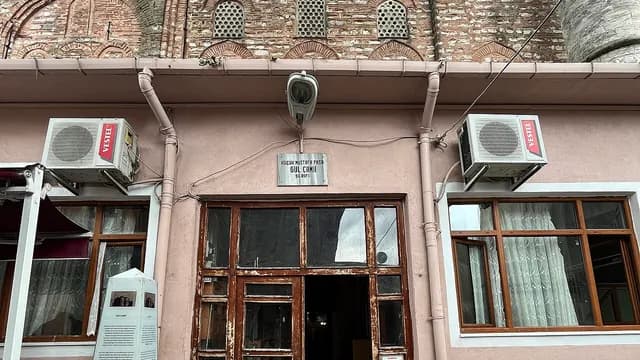
A late Ottoman neighborhood mosque in Hacı Aftal, commissioned by Hacı Mustafa Ağa in 1911.
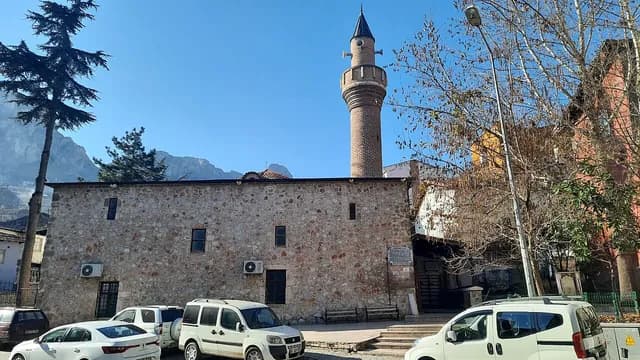
Afyonkarahisar Ulu Mosque (Grand Mosque)
A wooden-columned Seljuk mosque built between 1272 and 1277; UNESCO World Heritage since 2023.
Church
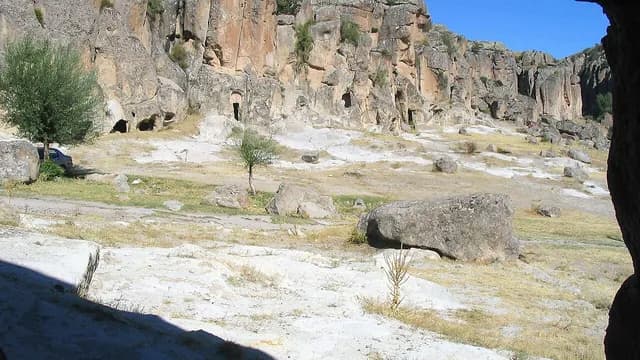
Ayazini Metropolis Church
İhsaniye, Afyonkarahisar
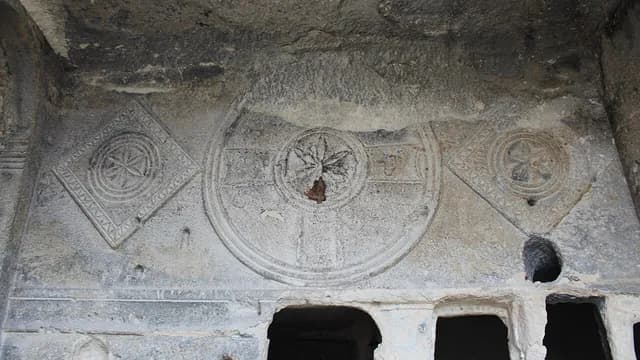
The symbol of Ayazini: a domed Byzantine church carved into tuff rock.
Gedik Ahmed Paşa (İmaret) Mosque
The mosque at the center of the large-courtyard complex commissioned by Gedik Ahmed Paşa, vizier of Mehmed the Conqueror.
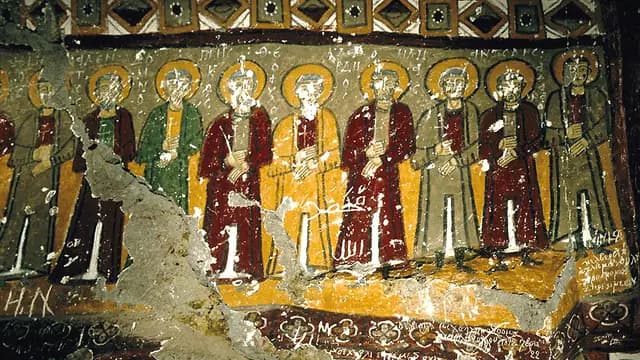
İbrahim İnleri Rock Church (Selimiye)
İscehisar, Afyonkarahisar
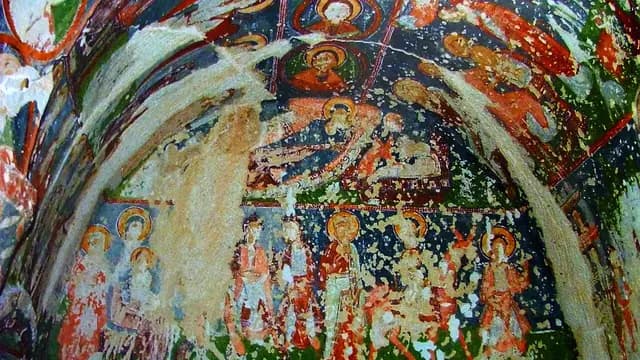
A three-nave Byzantine rock church with painted reliefs near Selimiye, dating to the 10th-11th century.
Sandıklı Ulu Mosque (Grand Mosque)
Sandıklı, Afyonkarahisar
A historic mosque built by the architect Aydemir in 1379, during the Germiyanid period.
Şuhut Ulu Mosque (Grand Mosque)
Şuhut, Afyonkarahisar
A historic mosque commissioned by Sarı Demirtaş Paşaoğlu Hamza Bey, also known as Çarşı (Bazaar) Mosque.
Tomb (türbe)
Tomb of Abdurrahman Sultan
Başmakçı, Afyonkarahisar
The tomb in Başmakçı of Abdurrahman Sultan, said to have been a disciple of Abdülkadir Geylani.
Cihanoğlu Mosque
Efeler, Aydın
A mosque and complex with Ottoman Baroque decoration, commissioned by the Cihanoğulları family in 1756.
Eski Çine Ahmet Gazi Mosque
Çine, Aydın
A Beylik-period mosque in Eski Çine village, built under the Menteşe Beylik and renovated in the 14th century.
Hacı Ziya Bey Mosque
Söke, Aydın
A single-domed, square-plan small mosque built in 1894 in Söke's Yenicami neighborhood.
Hisar Mosque (Former Greek Church)
Didim, Aydın
A mosque converted from an 1830 Greek Orthodox church, right beside the temple of Didyma.
İlyas Bey Mosque and Complex
A marble-clad Beylik-period mosque beside the ruins of Miletus, commissioned in 1404 by İlyas Bey, bey of Menteşe.
Bayat Village Old Mosque
Çivril, Denizli
A village mosque in Bayat, Çivril, famous for its wooden decoration and restored in its original form.
Hırka Mosque
Tavas, Denizli
A domed, square-plan 18th-19th-century Ottoman village mosque commissioned by Tavaslızade Osman Ağa.
Tomb of Hüsamettin Gazi Bey
Baklan, Denizli
A Seljuk-style tomb at the entrance of the old cemetery in Baklan, built for Hüsamettin Dede, a Seljuk raider commander who fought at Myriokephalon.
Aya Haralambos Church
Çeşme, İzmir
A 19th-century Greek Orthodox church in the Çeşme bazaar, now hosting arts and culture events.
Basilica of St. John
Selçuk, İzmir
The remains of a monumental basilica built under Emperor Justinian over the site believed to be the tomb of the Apostle John.
Bergama Ulu Mosque (Grand Mosque)
Bergama, İzmir
A mosque in the middle of the Bergama bazaar, built in the name of Yıldırım Bayezid in the early Ottoman period.
Birgi Ulu Mosque (Aydınoğlu Mehmet Bey Mosque)
Ödemiş, İzmir
Completed in 1312, a masterpiece of the beylik period with a walnut kündekari minbar and tiled mihrab.
Church of St. Polycarp
Konak, İzmir
The city's oldest Catholic church, dedicated to Polycarp, İzmir's first bishop.
Synagogue
Etz Hayim Synagogue
One of İzmir's oldest synagogues, around Havra Sokağı in Kemeraltı.
Hacı Sinan Mosque and Madrasa
Bayındır, İzmir
An Ottoman-period complex in central Bayındır with a multi-domed mosque, a madrasa and a hammam.
Hisar Mosque
Built in the 16th century, one of İzmir's largest and most ornate historic mosques.
Faith
House of the Virgin Mary
A small stone chapel on the wooded slope of Bülbül Dağı, visited by Christian and Muslim pilgrims alike.
İsa Bey Mosque
A building from the Aydınoğulları period, one of the important examples of Anatolian beylik architecture with its courtyard plan and marble facade.
Kiraz Ulu Mosque (İsa Bey Mosque)
Kiraz, İzmir
One of the three mosques commissioned by Aydınoğlu İsa Bey; Kiraz's most important historic building.
Konak (Yalı) Mosque
A small octagonal mosque beside the Clock Tower, notable for its tile-clad facades.
Santa Maria Catholic Church (Bornova)
Bornova, İzmir
A historic Catholic church that is part of Bornova's Levantine heritage.
Tire Ulu Mosque (Grand Mosque)
Tire, İzmir
A mosque built in the 14th century in the Aydınoğulları period and renewed by Aydınoğlu Cüneyd Bey.
Zübeyde Hanım Mausoleum
Karşıyaka, İzmir
The simple mausoleum in Karşıyaka of Zübeyde Hanım, Atatürk's mother.
Ahırardı Mosque
Merkez, Kütahya
A neighborhood mosque whose mihrab, preaching chair and mihrab wall were decorated with Kütahya tiles in a 1965 repair.
Bülbül Masjid
A small neighborhood masjid in the Mecidiye neighborhood, known to have existed before 1830, formerly called the Yakub Çavuş Masjid.
Çinili Mosque (Tiled Mosque)
An octagonal mosque designed and built by the painter Ahmet Yakupoğlu, clad inside and out entirely in Kütahya tiles.
Dönenler Mosque (Erguniye Mevlevi Lodge)
The semahane of the Kütahya Mevlevi Lodge, with origins going back to the 14th century; today used as the Dönenler Mosque.
Emet Ulu Mosque (Babuk Bey Mosque)
Emet, Kütahya
A beylik-period work commissioned by Babuk Bey, son of Yakup Bey, in the Germiyanoğulları period; also known as the Çarşı Mosque.
Gediz Ulu Mosque (Gazanfer Ağa Mosque)
Gediz, Kütahya
A mosque commissioned in 1553 by Chief Harem Eunuch Gazanfer Ağa and faithfully rebuilt after the 1970 earthquake.
Hayme Ana Tomb
Domaniç, Kütahya
The tomb built by Abdülhamid II in 1892 for Hayme Hatun, the 'Devlet Ana', mother of Ertuğrul Gazi.
İshak Fakih Mosque
A mosque from the last period of the Germiyanoğulları, with a stone-and-brick facade dated 1433 and 15th-century tiles.
Kütahya Ulu Mosque (Grand Mosque)
The city's only sultan's mosque, begun when Yıldırım Bayezid was a prince and completed by his son Musa Çelebi.
Sanctuary of Meter Steunene
Çavdarhisar, Kütahya
A rock and cave sanctuary southwest of Aizanoi, dedicated to the Mother Goddess.
Simav Ulu Mosque (Grand Mosque)
Simav, Kütahya
Simav's oldest mosque, completed in 1425 and repaired in 1551 by Süleyman Çavuş, a master builder of Mimar Sinan.
Tavşanlı Ulu Mosque (Grand Mosque)
Tavşanlı, Kütahya
A mosque rebuilt in 1883 on the foundations of a mosque commissioned by Arslan Bey in the Germiyan period.
Timurtaş Paşa Mosque
A mosque near the Küçük Bedesten, commissioned in 1389 by Sarı Timurtaş Paşa while he was warden of Kütahya.
Akhisar Ulu Mosque (Grand Mosque)
Akhisar, Manisa
Dated to the late 15th century, one of the early examples of the search for a centrally planned mosque.
Çeşnigir Mosque
Şehzadeler, Manisa
One of the city's oldest mosques, commissioned in 1474 by Çeşnigir Sinan Bey, a freedman of Sultan Mehmed the Conqueror.
Church of St. John (St. Jean)
Alaşehir, Manisa
A 6th-century basilica associated with the early Christian community of Philadelphia, with its massive brick piers still standing.
Hatuniye Mosque
The mosque of the complex founded in 1490–91 in the name of Hüsnüşah Hatun, wife of Bayezid II.
Hızır Bey Mosque (Çarşı Mosque)
Soma, Manisa
A mosque in the Soma bazaar commissioned by Yeğenzade Süleyman Bey in 1791–92, according to its inscription.
Manisa Mevlevi Lodge (Mevlevihane)
A historic Mevlevi lodge from the Saruhanoğulları period, visited today as a museum.
Manisa Ulu Mosque (Grand Mosque)
A beylik-period mosque completed in 1366 in the Saruhanoğulları period, overlooking the city from the slope of Spil.
Muradiye Mosque
A tiled Ottoman complex designed by Mimar Sinan and built in the name of Murad III in 1583–1585.
Sardis Synagogue
Salihli, Manisa
The largest Jewish place of worship known from the ancient world, with a mosaic floor, adjoining the gymnasium complex of Sardis.
Saruhan Bey Tomb
The tomb of Saruhan Bey, who took Manisa in the early 14th century and founded the Saruhanoğulları Beylik.
Sultan Mosque (Hafsa Sultan Complex)
A 16th-century complex built in the name of Ayşe Hafsa Sultan, mother of Süleyman; the birthplace of the Mesir Macunu tradition.
Firuz Bey Mosque
Milas, Muğla
An early Ottoman mosque dated 1394, clad in white and colored marble reused from ancient buildings.
Kurşunlu Mosque
Menteşe, Muğla
A 15th-century Ottoman mosque in central Muğla, named after its lead-clad dome.
Milas Ulu Mosque (Ahmed Gazi Mosque)
A beylik-period mosque built with reused ancient stones, commissioned by Ahmed Gazi of the Menteşe dynasty in the 14th century.
Muğla Ulu Mosque (Grand Mosque)
The city's oldest mosque, built in 1344 by İbrahim Bey of the Menteşe dynasty.
Saburhane Mosque
A small, masjid-sized mosque built in the 19th century on the site of a former dervish lodge, and the historic Saburhane neighborhood around it.
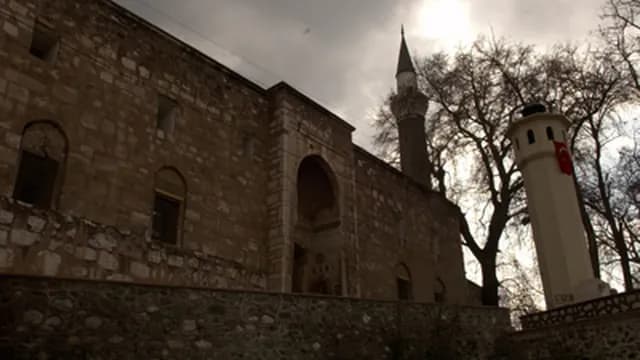
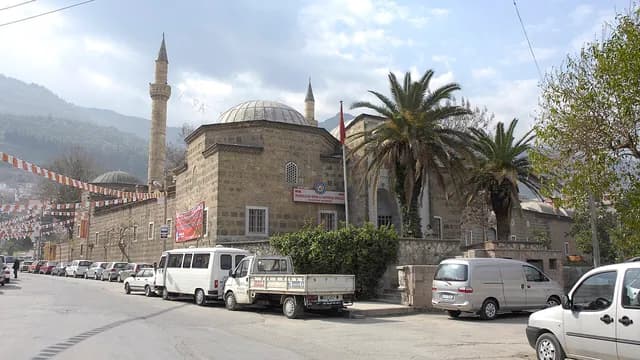
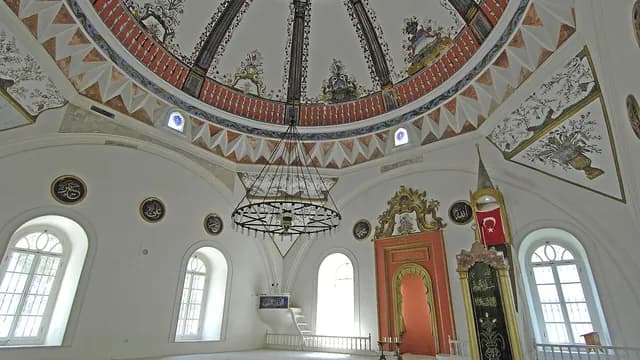
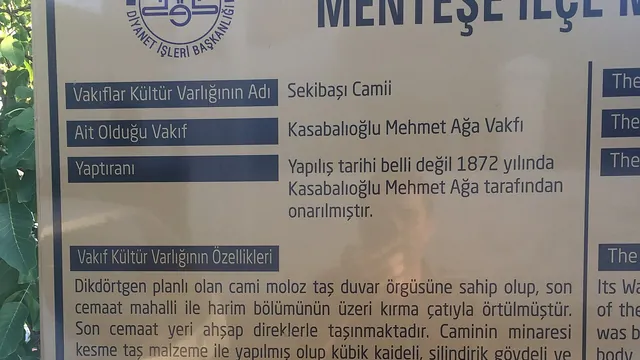
Sekibaşı Mosque
A 19th-century Muğla mosque in the Muslihittin neighborhood, known for its wooden minaret.
Burma Mosque
Merkez, Uşak
A double-domed Ottoman mosque known for its spiral minaret, with a repair inscription dated 1769.
Çakaloz Mosque
A cut-stone mosque in the Kurtuluş neighborhood, notable for its Western-influenced 19th-century architecture.
Karaali Mosque
A mosque in Mendepazarı with shops beneath its qibla side, whose minaret survives from an older building.
Uşak Ulu Mosque (Grand Mosque)
One of the oldest places of worship in the city center, dating from the Germiyanoğulları period.
Bayezid Paşa Mosque
Merkez, Amasya
An early Ottoman inverted-T-plan mosque on the east bank of the Yeşilırmak, built in 1414–1419 by Grand Vizier Bayezid Paşa.
Burmalı Minare Mosque
A 13th-century Seljuk mosque named after the twisted grooves encircling its minaret, with an octagonal tomb beside it.
Gök Medrese Mosque
A Seljuk work dated 1266–1267 combining a mosque, madrasa and tomb in a single building; it takes its name from the blue-glazed bricks on the tomb.
Gümüşlü Mosque
A bazaar mosque opposite the Hükümet Bridge, first built in 1326 and repaired in 1688, with a wooden late-comers' portico.
Halifet Gazi Kümbet (Tomb)
An octagonal kümbet built for the Danishmendid emir Halifet Gazi, containing a marble sarcophagus with reliefs of ram heads and winged figures.
Köprülü Mehmet Paşa Mosque
Gümüşhacıköy, Amasya
A mosque with a large dome and corner weight towers, built in Gümüşhacıköy in 1660 by Grand Vizier Köprülü Mehmet Paşa.
Mehmet Paşa Mosque
A riverside mosque built in 1486 by Mehmet Paşa, tutor of Şehzade Ahmed, famous for its marble minbar.
Merzifonlu Kara Mustafa Paşa Mosque
Merzifon, Amasya
The mosque of the Kara Mustafa Paşa Complex in central Merzifon, built in 1666 and famous for the landscape paintings in its ablution fountain dome.
Torumtay Tomb
A two-story Seljuk tomb with richly carved stone decoration on its facade, built in 1278 by Seyfeddin Torumtay, governor of Amasya.
Yörgüç Paşa Mosque
An inverted-T-plan mosque with red-and-white marble arches, built in the 1430s by Yörgüç Paşa, tutor of Murad II.
Barhal (Parhali) Church
Yusufeli, Artvin
A Georgian church in Altıparmak (Barhal) village, built in the 10th century under King David III, unique in the region for its domeless three-aisled basilica plan.
Monastery
Berta Monastery (Ortaköy Kilise Mosque)
Ardanuç, Artvin
The main church of a 9th-century Georgian monastery overlooking Ortaköy, now used as a mosque; the place where the famous Berta Gospels were produced.
Dolishane (Doliskana) Church
A domed 10th-century Georgian church in Hamamlı village, known for its relief of a king presenting a model of the church and its rich stone carving.
Dört Kilise (Tekkale Monastery)
A large 10th-century monastery complex, Othta Eklesia in Georgian, with a three-aisled basilica, set in a forested valley northwest of Tekkale village.
İşhan Monastery
A monastery church in İşhan village regarded as one of the masterpieces of medieval Georgian architecture, with multicolored dressed-stone facades, dome frescoes and rich stone carving.
İskender Paşa Mosque and Complex
A mosque in Adakale, Ardanuç's first settlement, named after Çerkez İskender Paşa, who took the castle in 1551; a stone with a Georgian inscription is set upside down in its wall.
Makriyali Church
Kemalpaşa, Artvin
The seaside remains of a medieval church in Kemalpaşa, where the Georgian King Bagrat V and the Trebizond princess Anna are said to have married in 1367.
Opiza Monastery
The remains, in Bağcılar village, of one of the earliest monasteries of the Georgian Middle Ages, where the famous Opiza Gospels were copied.
Porta (Khandzta) Monastery
A monastery founded at the end of the 8th century by Grigol Khandzteli in the Bağlık hamlet of Pırnallı village, preserving a medieval settlement fabric with its church, bell tower and fountain.
Tbeti (Tibeti) Church
Şavşat, Artvin
The grand main church of the Tbeti Monastery in Cevizli village, built in the early 10th century under the Bagratid Ashot Kukhi; its dome collapsed in 1953.
Yeni Rabat (Akhaldaba) Church
A 10th–11th-century Georgian church in the Çamlık (Rabat) quarter of Bulanık village, notable for the triangular niches on its dome drum and its floral stone carving.
Amasra Fatih Mosque
Amasra, Bartın
A former Byzantine church built in the 9th century inside Amasra Castle and converted into a mosque after the conquest of 1460.
Aya Nikola Church
Merkez, Bartın
A church in central Bartın built by the Greek community, used for a time as a power station and converted into a culture house.
Ebu Derda Tomb
A commemorative shrine tomb built in memory of Ebu Derda, one of the Companions of the Prophet, with a small mosque and fountain beside it.
İçkale Masjid (Küçük Kilise / Small Church)
A small chapel in the Amasra Inner Castle, built in the 9th century of brick and stone, converted into a masjid in the 15th century, with surviving traces of frescoes.
Bayburt Ulu Mosque (Grand Mosque)
Merkez, Bayburt
The city's grand mosque, linked to the period of the Anatolian Seljuk Sultan Gıyaseddin Mesud II, rebuilt in the 1970s in keeping with its original plan.
Konursu Ulu Mosque (Grand Mosque)
The 'nail-free mosque' in the village of Konursu, known for its woodwork made in 1812 with the joinery technique without nails or glue.
Tomb of Dede Korkut
A kümbet at the entrance to the village of Masat (Yıldırım), accepted as belonging to Dede Korkut, the wise bard of the Oghuz Turks; commemorated with a festival every July.
Gazi Süleyman Paşa Mosque
Göynük, Bolu
Göynük's historic mosque, commissioned in the 14th century by Gazi Süleyman Paşa, son of Orhan Gazi, with the Tomb of Akşemseddin in its courtyard.
Kadı Mosque
Merkez, Bolu
A mosque commissioned in 1499 by Mehmet Bey, son of Demirtaş Paşa, known for its wooden door in kündekâri work and its projecting pentagonal mihrab section.
Mudurnu Yıldırım Bayezid Mosque
Mudurnu, Bolu
A mosque commissioned by Yıldırım Bayezid as a prince, considered one of the early Ottoman experiments with large domes, with its single dome of about 19.5 meters.
Saraçhane Mosque
A historic bazaar mosque near Bolu's main square, rebuilt in 1750 according to its inscription, with shops on its lower floor.
Tomb of Akşemseddin
A hexagonal-plan tomb commissioned in 1464 for Akşemseddin, teacher of Sultan Mehmed the Conqueror, famous for its walnut sarcophagus.
Yıldırım Bayezid Mosque (Büyük Cami / Great Mosque)
The great twin-minaret mosque in the middle of the Bolu bazaar, commissioned by Yıldırım Bayezid in 1382 and rebuilt at the end of the 19th century.
Çorum Ulu Mosque (Grand Mosque)
Merkez, Çorum
The city's mosque, accepted as having been built in the Seljuk period at the end of the 13th century and rebuilt after earthquakes, notable for its woodwork.
Elvan Çelebi Zaviye (Dervish Lodge)
Mecitözü, Çorum
A zaviye and tomb going back to the 13th–14th centuries in the village where Elvan Çelebi, son of Âşık Paşa, settled; used today as the village mosque.
İskilip Ulu Mosque (Grand Mosque)
İskilip, Çorum
A district mosque rebuilt in 1841 by the architect Çördükoğlu Hasan on the foundations of the old mosque destroyed in the 1839 earthquake and fire.
Akçakoca Central Mosque
Akçakoca, Düzce
A contemporary mosque departing from the classic dome tradition with its octagonal roof inspired by Seljuk goat-hair tents and the Turkish otağ.
Hemşin Village Mosque
A wooden village mosque built with the nail-free çantı technique by Hemşin people who migrated from Artvin after the 1877–78 war.
Tomb of Eş Şeyh Aliyyü'l-Müslihiddin
Çilimli, Düzce
A tomb presented as Çilimli's most important place of pilgrimage in terms of faith tourism.
Armutdüzü Church
Keşap, Giresun
The remains of a Greek church at the Kiliseyanı locality in the village of Armutdüzü, south of Keşap; the village is also known for Şahin Kayası, which resembles a natural map of Türkiye.
Hasan Ağa Mosque
Görele, Giresun
A historic mosque in central Görele bearing the name of the philanthropist Kemalzade Hacı Hasan Ağa, whose present building is dated 1904.
Monastery of the Virgin Mary (Meryem Ana Manastırı)
Şebinkarahisar, Giresun
A four-story Byzantine-period monastery in Şebinkarahisar, built inside a large hollow in a steep cliff.
Tomb of Pir Aziz
Piraziz, Giresun
A tomb beside the Pir Aziz Mosque, accepted as belonging to Pir Aziz, who gave the district its name.
Çakırkaya Monastery
Şiran, Gümüşhane
A monastery in the village of Çakırkaya in Şiran, made by carving a rock mass about 65 meters high, referred to as 'the Sumela of Gümüşhane'.
İmera Monastery
Merkez, Gümüşhane
A monastery church dedicated to St. John Prodromos in the village of Olucak (İmera) near the Krom Valley, notable for its stone-decorated door.
Kabaköy Ayasofya Mosque
A village mosque in Kabaköy, built as a church and later converted into a mosque; referred to as one of the buildings named Ayasofya in Türkiye.
Sultan Süleyman Han Mosque
A mosque with wooden posts forming the core of Old Gümüşhane, dated to the time of Suleiman the Magnificent and preserving its original minaret.
İzzet Mehmet Paşa Mosque
Safranbolu, Karabük
A mosque commissioned between 1794 and 1798 by Grand Vizier İzzet Mehmet Paşa from Safranbolu, with the tughra of Selim III on its minbar.
A classical Ottoman mosque commissioned in 1661–62 by the Grand Vizier Köprülü Mehmet Paşa, with a sundial in its courtyard and opening onto the arasta.
Safranbolu Ulu Mosque (Grand Mosque)
The stone Ulu Mosque in the Kıranköy part of Safranbolu, formerly St. Stephen's Church.
Abdurrahman Paşa Mosque (Tosya)
Tosya, Kastamonu
Tosya's largest classical-period Ottoman mosque, built in 1582 by Mimar Sinan's students to his plan.
Atabey Gazi Mosque (Kastamonu Ulu Mosque)
Merkez, Kastamonu
The Kastamonu Ulu Mosque, commissioned in 1273 by Muzaffereddin Yavlak Arslan, called 'Kırk Direkli' because of the forty wooden pillars inside.
Benli Sultan Complex
A group of tomb and mosque buildings in the village of Benli Sultan north of Ilgaz Dağı, accepted as having been founded in the early 16th century.
İbn-i Neccar Mosque
The İbn Neccâr Mosque, dated 1353, from the Çobanoğulları period; a quiet stop in the old neighborhoods at the foot of the castle.
İsmail Bey Mosque and Hamam (Devrekani)
Devrekani, Kastamonu
Devrekani's historic center, with a hamam about 550 years old built in the name of the Candarid İsmail Bey and the mosque beside it.
Kasaba Village Mahmut Bey Mosque
A Candarid mosque dated 1366, famous for its wooden ceiling built without nails and its painted decoration; a UNESCO World Heritage Site since 2023.
Küre Ulu Mosque (Hoca Şemseddin Mosque)
Küre, Kastamonu
A historic mosque in the Küre district center, understood from its endowment deed dated 1465–66 to have been commissioned before then by Hoca Şemseddin.
Nasrullah Mosque and Square
A nine-domed mosque commissioned by Kadı Nasrullah in 1506, the symbol of Kastamonu with its square, şadırvan and bridge.
Şeyh Şaban-ı Veli Complex
The city's most visited faith site, with the tomb, mosque, lodge and foundation museum of Şeyh Şaban-ı Veli, founder of the Şâbâniyye branch of the Halveti order.
Seyyid Zülfikar Mosque and Tomb
Seydiler, Kastamonu
The historic mosque and tomb of the settlement founded with the tekke of the dervish Seyyid Zülfikar, who gave Seydiler its name.
Atik İbrahim Paşa Mosque
Altınordu, Ordu
Ordu's historic Orta (Middle) Mosque, first built of wood in 1770 and renewed in 1802, known for its Baroque mihrab.
Aziziye (Yalı) Mosque
The Aziziye (Yalı) Mosque on the shore; built of wood in the time of Sultan Abdülaziz and renewed in stone in 1890.
Cape Yason and Yason Church
Perşembe, Ordu
A peninsula associated with the legend of the Golden Fleece, with a church dated 1869 on it; a favorite coastal spot for sunrise and sunset.
Muzadere Church
Mesudiye, Ordu
A single-aisled church on the steep terrain of the Muzadere Highland in Mesudiye, dated to the mid-19th century and restored in 2020.
Taşbaşı Church (Taşbaşı Cultural Center)
A three-aisled basilica built in 1853 as a Greek Orthodox church, used as a cultural center since 2000.
Yalı Church (Ünye)
Ünye, Ordu
A church built by Greeks in the second half of the 19th century, restored and converted into a culture and arts center.
Aşağı Çamlıca Mosque
Çamlıhemşin, Rize
A two-story stone village mosque built in 1738 according to its door inscription, with a madrasa section on the ground floor.
Bilenköy Mosque
Hemşin, Rize
A 19th-century village mosque in the village of Bilen in Hemşin, rising on a stone ground floor with the nail-free wooden log technique.
İslampaşa Kurşunlu Mosque
Merkez, Rize
A classical Ottoman mosque commissioned in 1570–71 by İskender Cafer Paşa according to its door inscription, named after its lead-covered dome.
Ayaklıalan Church
Asarcık, Samsun
A 19th-century church on a hill above the village of Ayaklıalan in Asarcık, its roof collapsed but colorful decoration still on its walls.
Bekdemir Nail-Free Mosque (Bekdemir Çivisiz Camii)
Kavak, Samsun
A wooden mosque dated 1596 in the village of Bekdemir in Kavak, built by fitting oak logs together without nails, with root-dye painted decoration.
Göğceli Mosque
Çarşamba, Samsun
A mosque dated to 1206 by carbon testing, built with the nail-free interlocking timber technique and still open for worship.
Great Mosque (Valide Mosque)
İlkadım, Samsun
The two-minaret Great Mosque (Valide Mosque) near Saathane, rebuilt in 1884 after the 1869 fire.
Mater Dolorosa Church
A Catholic church built in 1846, named Mater Dolorosa since 1885, open for worship and visits.
Seyyid Kutbiddin Mosque and Tomb
A brick mosque with a wooden portico, dated 1292 according to its inscription, and the tomb beside it; among Samsun's oldest buildings.
Taceddin İbrahim Paşa Mosque
Vezirköprü, Samsun
Vezirköprü's historic mosque, built around 1495 according to its waqf deed as an imaret with a zaviye and later converted into a mosque.
Alaaddin Mosque (Sinop Ulu Camii)
Merkez, Sinop
The city's great mosque, built in the early 13th century after the Anatolian Seljuks took Sinop, with an ablution fountain in its courtyard and the Pervane Madrasa as its neighbor.
Balatlar Church
A Byzantine-period church built within a Roman building complex, with frescoes and mosaics, where excavations are ongoing.
Tomb of Seyyid Bilal
A tomb, one of the city's old places of pilgrimage, where according to tradition Seyyid Bilal, who was martyred in Sinop in the early 8th century, is buried.
Ali Paşa Mosque
Merkez, Tokat
A domed mosque commissioned in 1572 by Ali Paşa, Beylerbeyi of Erzurum; Tokat's only surviving original 16th-century wooden ablution fountain is here.
Garipler Mosque
A building from the Danishmendid period, known for its green-glazed brick minaret and counted among Anatolia's oldest mosques.
Hubyar Sultan Lodge (Tekke)
Almus, Tokat
The Hubyar Sultan Lodge at the foot of Tekeli Dağı in the village of Hubyar in Almus; an important Alevi place of pilgrimage.
Niksar Ulu Camii (Great Mosque)
Niksar, Tokat
The Ulu Cami, one of Niksar's oldest mosques, built in the mid-12th century in the Danishmendid period.
Silahtar Ömer Paşa Mosque
Erbaa, Tokat
A 17th-century building in the village of Akça in Erbaa, considered one of Anatolia's richest preserved wooden mosques.
Sümbül Baba Zaviye and Tomb
The Sümbül Baba Zaviye, dated 1292, with its Seljuk portal, masjid and tomb preserved.
Tomb of Melik Gazi
The mosque-like, Seljuk-style tomb of the Danishmendid Melik Ahmet Gazi, who conquered Niksar.
Zile Ulu Camii (Great Mosque)
Zile, Tokat
The lead-domed Zile Ulu Camii, whose first building dates back to 1267, rebuilt by Nasuh Paşa in 1591.
Aya Varvara Church
Maçka, Trabzon
A small church and monastery remains surrounded by a protective wall, right near Sümela Monastery.
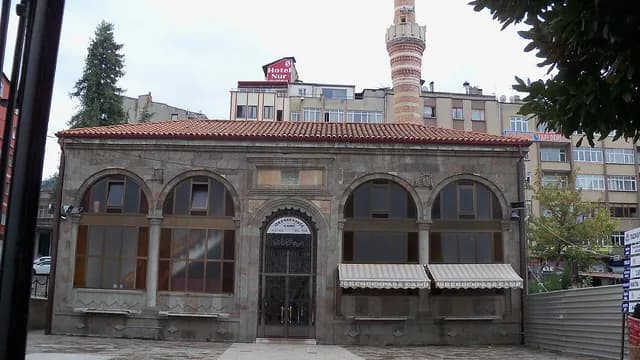
Çarşı Mosque
Ortahisar, Trabzon
A 19th-century building in the middle of the historic bazaar, commissioned by Governor Hazinedarzade Osman Paşa and cited as the largest mosque in the city.
Gülbahar Hatun Mosque and Tomb
A mosque with zaviyes built in 1514 in the name of Gülbahar Hatun, mother of Yavuz Sultan Selim, and the octagonal tomb just to its east.
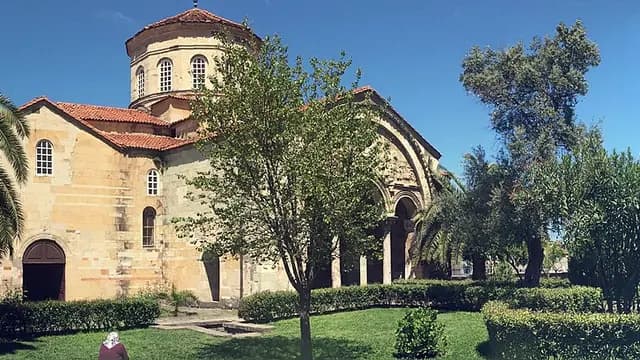
Hagia Sophia Mosque (Ayasofya Camii)
A 13th-century church from the Empire of Trebizond period, famous for its frescoes and stone decoration; used today as a mosque.
İskenderpaşa Mosque
An Ottoman mosque commissioned in the 16th century by İskender Paşa, governor of Trabzon, known for its minaret of alternating courses.
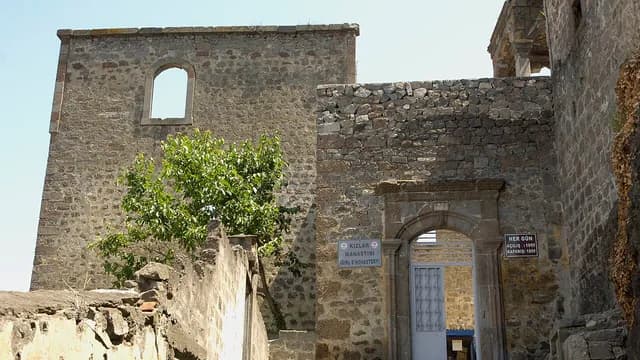
Kızlar Monastery (Panagia Theoskepastos)
A convent at the foot of Boztepe founded in the time of Alexios III, opened to visitors in 2021 after a long restoration.
Küçük Ayvasıl Church
The three-naved Church of Saint Anne, considered one of Trabzon's oldest churches thanks to its repair inscription dated 884.
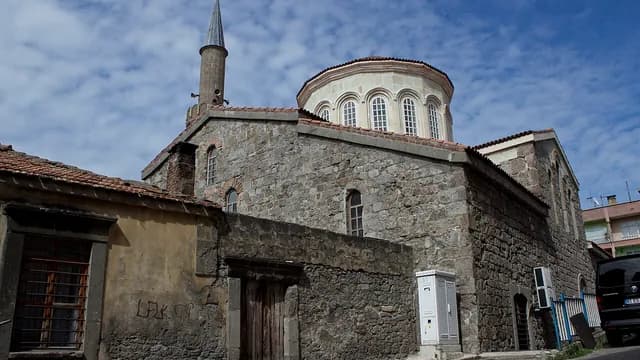
Ortahisar Fatih Great Mosque
A historic mosque within the castle, converted from the Church of Panagia Chrysokephalos, where the Komnenos emperors were crowned.
Rock Church (Çamlık)
Vakfıkebir, Trabzon
A historic rock-cut church in the Çamlık (formerly Petromida) neighborhood of Vakfıkebir, reported to contain depictions of Christ and the apostles.
Santa Maria Catholic Church
A three-naved Catholic church and guesthouse complex built in 1869–1874, still open for worship today.
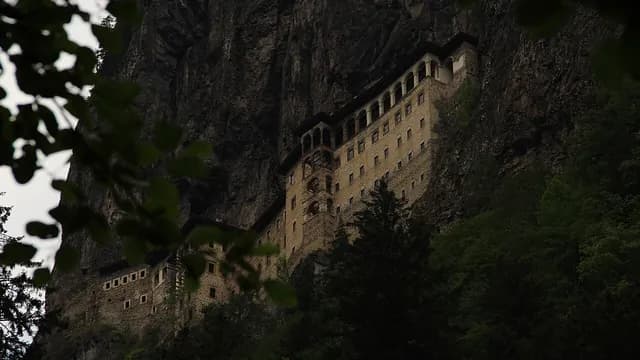
Sümela Monastery
The Black Sea's most famous monastery, set against a steep cliff in the Altındere Valley, with its rock church and frescoes.
Vazelon Monastery
Monastery remains on a rock at 1200 meters in Maçka, dedicated to John the Baptist, bearing traces of frescoes on its facade.
Yeni Cuma Mosque
The former Church of Hagios Eugenios, dedicated to the city's patron saint Eugenios; converted into a mosque after the conquest.
Ağaçaltı Church
Güzelyurt, Aksaray
A cross-plan rock church at the foot of the Ihlara stairs, also called Daniel Pantonassa after its depiction of Saint Daniel among the lions.
Aksaray Ulu Mosque (Grand Mosque)
Merkez, Aksaray
Aksaray's grand mosque, commissioned by Karamanoğlu Mehmet Bey II in 1408–1409 and known for its carved portal.
Çanlı Church
One of Cappadocia's rare cut-stone Byzantine churches, rising amid a rock-cut settlement between Akhisar and Çeltek.
Güzelyurt Manastır Valley (Monastery Valley)
A valley of about 5 km stretching from Güzelyurt to the Yüksek Kilise, lined with more than twenty rock-cut churches and chapels.
Kilise Mosque (Church of Saint Gregorios)
A church believed to have been built in the 4th century in the name of the theologian Gregory of Nazianzus, born in Gelveri, repaired in 1835 and converted into a mosque after the population exchange.
Kızıl Kilise (Red Church)
A 5th–6th-century Byzantine church near the village of Sivrihisar, named for its reddish cut stone; on the World Monuments Fund watch list.
Kokar Church
A single-nave church in Ihlara Valley known for its well-preserved 11th-century frescoes and the large cross motif on its ceiling.
Pürenli Seki Church
A four-section rock church in Ihlara with 10th–12th-century frescoes depicting the childhood of Christ and the prophecies of the prophets.
Selime Cathedral
Cappadocia's largest rock-cut cathedral, carved into the rocks above the village of Selime and divided into three naves by two rows of columns.
Selime Sultan Tomb
An early-13th-century Seljuk tomb with a conical roof at the entrance to Selime, combining stone and brickwork.
Somuncu Baba Tomb and Complex
The tomb and complex in Aksaray of the Sufi Somuncu Baba (Hamîdüddin-i Aksarâyî), who is said to have delivered the first sermon at the Bursa Ulu Mosque.
Sümbüllü Church
A rock-cut church in Ihlara Valley, striking for its two-level monastic spaces and arched facade.
Yılanlı Church
A late-9th-century Ihlara church famous for its unusual Last Judgment scene in which sinners are punished by snakes.
Yüksek Church
A 19th-century church perched atop a steep rock 3 km from Güzelyurt, with views of Hasandağı and the lake.
Ahi Elvan Mosque
Altındağ, Ankara
A 14th-century mosque on the slope of Ankara Castle bearing traces of the Ahi tradition, with wooden columns and a richly carved walnut minbar.
Ahi Mesut Tomb
Etimesgut, Ankara
The tomb in Bağlıca of Ahi Mesud, one of Ankara's Ahis, who gave his name to the Etimesgut district.
Arslanhane (Ahi Şerafeddin) Mosque
The Seljuk-era Ahi Şerafeddin Mosque, with wooden columns and a carved wooden minbar, inscribed on the UNESCO World Heritage List in 2023.
Hacı Bayram-ı Veli Mosque and Tomb
A historic mosque with the tomb of Hacı Bayram-ı Veli, founder of the Bayramiye order, right next to the Temple of Augustus.
Hüseyin Gazi Tomb and Hüseyingazi Mountain
Mamak, Ankara
The tomb of Seyyid Hüseyin Gazi, remembered as the father of Battal Gazi, on the summit of the mountain of the same name in Mamak.
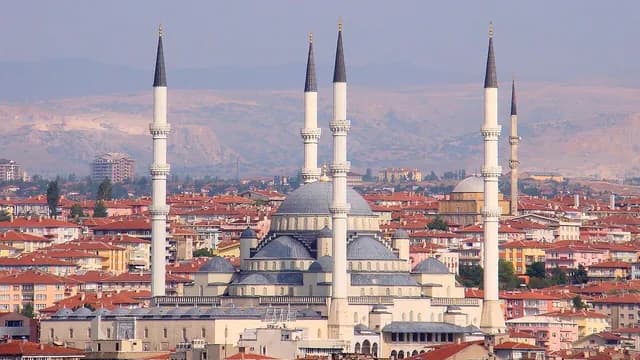
Kocatepe Mosque
Çankaya, Ankara
A large four-minaret mosque, a symbol of Ankara's skyline, built in the style of the classical Ottoman imperial mosques.
Şeyh Ali Semerkandî Tomb
Çamlıdere, Ankara
The much-visited tomb of the 15th-century Sufi Şeyh Ali Semerkandî, within a complex in Çamlıdere.
Sinanlı Ulu Mosque (Grand Mosque)
Ayaş, Ankara
A traditional Anatolian village mosque in Sinanlı village, Ayaş, built in 1547 and divided into five aisles by wooden columns.
Çankırı Büyük Mosque (Sultan Süleyman Mosque)
Merkez, Çankırı
Çankırı's centrally domed Great Mosque, built by Sadık Kalfa in Mimar Sinan's era on the order of Suleiman the Magnificent.
Hacı Murad-ı Veli Tomb
Eldivan, Çankırı
The tomb of Hacı Murad-ı Veli, one of the Khorasan dervishes, built together with a mosque in Seydi village, Eldivan.
Hoş İslamlar (Hacı Hamza Sultan) Tomb
Atkaracalar, Çankırı
The tomb of the 15th-century scholar Hacı Hamza Sultan south of Atkaracalar at the foot of the Dumanlı Mountains; with its cool air, a place of visitation and excursion.
Paşa Sultan Mosque
Şabanözü, Çankırı
The historic Paşa Sultan (Ulu) Mosque in Şabanözü, reflecting the Beylik-period tradition with its wooden-columned interior.
Pir-i Sanî Mosque and Tomb
Çerkeş, Çankırı
The domed tomb, inside a masjid, of Çerkeşli Hacı Mustafa Efendi, 'Pir-i Sani', a leading figure of the Halveti-Şabani order.
Sultan Murad IV Mosque
The Muradiye Mosque, which Murad IV ordered to be built in Çerkeş on his return from the Revan campaign, as rebuilt after the 1944 earthquake.
Alaaddin Mosque (Eskişehir)
Odunpazarı, Eskişehir
A mosque in the park bearing its name, with origins going back to 1236, in the time of the Anatolian Seljuk Sultan Alâeddin Keykubad I.
Alemşah Kümbet
Sivrihisar, Eskişehir
A two-story kümbet north of the Ulu Mosque, commissioned in 1327 by Melikşah Bey for his brother Sultan Şah.
Çarşı Mosque (Mahmudiye)
Mahmudiye, Eskişehir
A mosque of the Abdülhamid period in the Mahmudiye district center, designed with its 1905 inscription as a small complex with a madrasa and sebil.
Hara Mosque (Mahmudiye)
A mosque beside the historic stud farm in Mahmudiye, commissioned by Sultan Abdülhamid II in 1897 according to its inscription.
Sivrihisar Ulu Mosque (Grand Mosque)
One of Anatolia's largest wooden-columned mosques, whose roof is supported by 67 wooden columns; on the UNESCO Tentative List.
Surp Yerrortutyun Armenian Church
A three-aisled basilica rebuilt in 1881, referred to as one of the large Armenian churches of Anatolia.
Tomb of Yunus Emre (Mihalıççık)
Mihalıççık, Eskişehir
The tomb and grave of the great folk poet Yunus Emre in the Yunusemre neighborhood of Mihalıççık.
Aktekke Mosque (Mader-i Mevlânâ)
Merkez, Karaman
A Mevlevi lodge mosque commissioned in 1370 by the Karamanid Alâeddin Bey, containing the grave of Rumi's mother Mümine Hatun.
Çeşmeli Church
The former Surp Asdvadzadzin Church of Karaman's Armenian community; ceiling frescoes were uncovered in the 2007 restoration, and today it is a culture and arts venue.
Ermenek Ulu Mosque (Grand Mosque)
Ermenek, Karaman
A historic mosque commissioned in 1302 by the Karamanid Mahmud Bey according to its inscription, overlooking the town from the foot of Ermenek Castle.
Kazımkarabekir Ulu Mosque (Grand Mosque)
Kazımkarabekir, Karaman
A historic mosque in the Kazımkarabekir district center dated to the 14th century, built of the local white 'kasaba taşı'.
Tomb of Alâeddin Bey
A 14th-century kümbet at the foot of the castle containing the grave of the Karamanid Alâeddin Bey.
Yunus Emre Mosque and Tomb
The tomb where, according to Karaman tradition, Yunus Emre rests, and the adjoining Karamanid-period mosque.
Bünyan Ulu Mosque (Grand Mosque)
Bünyan, Kayseri
A historic mosque, also known as the Salih Bey Mosque, commissioned by Emir Zahireddin Mahmud in 1333 in the Ilkhanid period.
Çifte Kümbet (Melike Adile Kümbet)
Melikgazi, Kayseri
A kümbet with an octagonal body on Sivas Bulvarı, built in 1247 for Melike Adile Hatun, wife of the Seljuk Sultan Alaeddin Keykubad I.
Develi Ulu Mosque (Grand Mosque)
Develi, Kayseri
A Seljuk-period mosque, also known as the Sivasi Hatun Mosque, commissioned in 1281 according to its inscription.
Döner Kümbet
The most famous of Kayseri's kümbets, built in 1276 for Şah Cihan Hatun, with its twelve facets decorated with reliefs of plants and animal figures.
Emir Melik Gazi Kümbet
Pınarbaşı, Kayseri
A Danishmendid kümbet at the foot of Zamantı Castle with an early-period character and facades with geometric brick decoration, popularly called the 'Tomb with Mummies'.
Hacı Kılıç Mosque and Madrasa
Kocasinan, Kayseri
A unique Seljuk work commissioned in 1249 by Ebu'l-Kasım bin Ali et-Tusi, combining a mosque and a madrasa in a single building.
Kavaklı Village Mosque (Church of St. Basil)
Özvatan, Kayseri
A 19th-century church converted into a mosque in the village of Kavaklı in Özvatan, known for its monumental courtyard gate with a pediment and its bell tower with a marble bust of a woman.
Kayseri Ulu Mosque (Grand Mosque)
One of the oldest mosques in Anatolia of the deep-plan type, begun in the mid-12th century in the Danishmendid period.
Kurşunlu Mosque (Hacı Ahmed Paşa Mosque)
A 16th-century mosque named after its lead-covered dome (kurşun: lead), considered Mimar Sinan's only surviving work in Kayseri.
Surp Krikor Lusavoriç Church
An Armenian Apostolic church first recorded in 1191 and rebuilt in 1859, today the only church in Kayseri open for worship.
Taşlık Village Mosque (Church of St. George)
A basilica in the village of Taşlık in Özvatan that preserves its identity as a 19th-century church with its bell tower and columns with Corinthian capitals, now used as a mosque.
Tomb of Seyyid Burhaneddin
A domed tomb rebuilt in the Seljuk style in 1892 over the grave of Seyyid Burhâneddin Muhakkık-ı Tirmizî, Rumi's teacher.
Ballı Mosque
Balışeyh, Kırıkkale
A historic mosque in Balışeyh, notable for its wooden posts and painted ceiling decoration continuing the Seljuk tradition.
Hasandede Mosque and Tomb
Merkez, Kırıkkale
A historic mosque in the town of Hasandede, built in 1605 and visited together with the tomb of Hasan Dede, who gave the town its name.
Kırıkkale Nur Mosque
A large mosque and complex in central Kırıkkale, designed on the model of the style of Mimar Sinan's Selimiye Mosque in Edirne.
Şeyh Şami Mosque and Tomb
Sulakyurt, Kırıkkale
A mosque commissioned in the 15th century by Şeyh Şami, considered the founder of Sulakyurt, containing his tomb.
Tomb of Koçubaba
The tomb of Koçu Baba, a Turkmen sage respected in the Bektashi tradition, in the village of Koçubaba attached to Balışeyh.
Ahi Evran Mosque and Tomb
Merkez, Kırşehir
A group of buildings converted from a zaviye into a mosque, containing the tomb of Ahi Evran, considered the founder of Ahilik, the organization of tradesmen and craftsmen.
Kırşehir Alaaddin Mosque
Kırşehir's grand mosque, commissioned in 1230 by Sultan Alaeddin Keykubad I and completely rebuilt in 1893.
Melik Gazi Kümbet
A Seljuk-period kümbet in the southeastern part of central Kırşehir, dated to the 13th century.
Tomb of Aşık Paşa
The tomb over the grave of the 14th-century poet Âşık Paşa (d. 1332), author of the Garibnâme, one of the first great Sufi works in Turkish.
Üçayak Church
The remains of a 10th–11th-century Byzantine church with twin domes, built entirely of brick, rising in a deserted area north of Kırşehir.
Acem Nasuh Mosque
Hüyük, Konya
A 14th-century building in the Köşk neighborhood belonging to the Konya region's tradition of mosques with wooden posts.
Ak Türbe (White Tomb, Gürağaç)
Güneysınır, Konya
A tomb standing in the old cemetery south of Gürağaç, dated to the late 14th–early 15th century.
Akkise Mosque
Ahırlı, Konya
A three-aisled village mosque in the Akkise neighborhood, built in 1859, with wooden posts and wooden decoration.
Akşehir Ulu Mosque (Grand Mosque)
Akşehir, Konya
Akşehir's historic grand mosque, dated 1213 according to its minaret inscription, going back to the Seljuk period and notable for its tiled mihrab.
Alâeddin Mosque and Alâeddin Hill
Selçuklu, Konya
Konya's largest and oldest mosque, on Alâeddin Hill in the middle of the city, containing the kümbet of the Seljuk sultans.
Aya Elenia Church
The symbol of Sille; the Church of the Archangel Michael, attributed by tradition to Empress Helena, whose present structure bears 19th-century repairs.
Aziziye Mosque
Karatay, Konya
Konya's last great Ottoman mosque, in the middle of the Bedesten bazaar, with its Baroque- and Empire-influenced facade and balconied minaret balconies.
Church of St. Paul
Meram, Konya
The Catholic Church of St. Paul, southeast of Alâeddin Hill, built in 1910 and the only church still standing in Konya.
Deştiğin Ulu Mosque (Grand Mosque)
Doğanhisar, Konya
A 19th-century wooden mosque in Deştiğin whose decoration was renewed in a comprehensive repair.
Doğanhisar Ulu Mosque (Grand Mosque)
Doğanhisar's most valuable building, with its inscription dated 1548 and its painted wooden ceiling related to classical-period mosques in Istanbul.
Eşrefoğlu Mosque
Beyşehir, Konya
Anatolia's largest and most original mosque with wooden columns, commissioned in 1296–1299 by Eşrefoğlu Süleyman Bey; a UNESCO World Heritage Site since 2023.
Ladik Kaşı Mosque
Sarayönü, Konya
A mosque in Ladik built in 1887, notable for its wooden mihrab, minbar and preaching chair decorated with the nailed-on (çakma) technique.
Ladik Ulu Mosque (Grand Mosque)
A five-aisled mosque with wooden posts in Ladik, built over ancient Laodicea Katakekaumene, with painted decoration and an openwork wooden mihrab and minbar.
Pir Hüseyin Bey Mosque
The Great Mosque in central Sarayönü, commissioned in 1408, remaining from the Turgutoğulları period with its prayer hall with wooden columns.
Selimiye Mosque
A classical Ottoman mosque with twin minarets right next to the Mevlânâ Museum, commissioned by Selim II when he was a prince.
Şerafettin Mosque
A 17th-century Ottoman mosque at the entrance to the Bedesten bazaar, with its large dome resting on ten massive piers and its painted decoration.
Sultan Selim Mosque and Complex
Karapınar, Konya
The surviving twin-minaret mosque of the complex commissioned by Prince Selim during his governorship of Konya and completed in 1563.
Tomb and Mosque of Shams-i Tabrizi (Şems-i Tebrizi)
A shrine-tomb named after Shams-i Tabrizi, Rumi's spiritual companion, and the adjoining historic mosque.
Tomb of Emirgazi (Emrullah Gazi)
Emirgazi, Konya
A Karamanid-period tomb with a circular plan and conical cap, attributed to Emrullah Gazi, who gave the district its name.
Tomb of Kuzucu Sultan
A 13th-century Seljuk tomb adjoining the Kuzucu Sultan Mosque, with an octagonal body and pyramidal cap.
Tomb of Nasreddin Hoca
The tomb in Akşehir of Nasreddin Hoca, the symbol of humor; although it is open on all four sides, a huge lock hangs on its door.
Tomb of Seyyid Mahmud Hayrânî
The 13th-century tomb of the Sufi Seyyid Mahmud Hayrânî, a contemporary of Rumi, at the foot of the Sultan Mountains, and the masjid in its garden.
Uzun Şeyh Mosque
Taşkent, Konya
A historic mosque in central Taşkent from the first quarter of the 16th century, restored after a fire.
Çavuşin Old Village and Church of St. John the Baptist
Avanos, Nevşehir
The Church of St. John the Baptist, carved into a large rock slope at the top of Çavuşin's abandoned old village and counted among the oldest churches in Cappadocia.
Church of Saints Constantine and Helena
Ürgüp, Nevşehir
A church on Mustafapaşa square, built in 1729 and repaired again in 1850, one of the most important churches of Sinasos.
Church of St. Theodore Tyron (Derinkuyu)
Derinkuyu, Nevşehir
A building in Derinkuyu built in 1858 for the local Greek Orthodox community, also known as the 'Grape Church' because of the grape reliefs on its exterior.
Church of the Forty Martyrs (Şahinefendi)
An early-13th-century rock church near Şahinefendi village, known for its rich frescoes depicting the lives of the Forty Martyrs of Sebasteia.
El Nazar Church
Merkez, Nevşehir
A fresco-decorated 10th-century church carved into a rock cone in the small valley between the town of Göreme and the open-air museum.
Hacı Bektaş Veli Çilehane (Retreat)
Hacıbektaş, Nevşehir
A faith and pilgrimage site outside the district center with the Delikli Taş cave, where Hacı Bektaş Veli is believed to have withdrawn into seclusion at times.
Karşı Kilise (Church of St. John)
Gülşehir, Nevşehir
A two-level church carved into a conical rock mass at the entrance to Gülşehir, important for its 13th-century upper-level frescoes and dated inscription.
Keşlik Monastery
One of Cappadocia's most complete rock monastery complexes, near Cemil village, with two churches, a chapel, a refectory and a wine press.
Monastery of St. Nicholas
A four-part monastery, half carved into the rock, dedicated to St. Nicholas of Myra, in the Monastery Valley 1 km south of Mustafapaşa.
Pancarlık Church
A little-known small rock church near Ortahisar, hidden among orange-toned rock formations, with well-preserved frescoes.
Sarıca Church
A rock church in the Pancarlık Valley between Ortahisar and Mustafapaşa, unearthed in 1996 and brought back to life by an award-winning restoration.
Tokalı Church
Göreme's largest rock church, famous for its frescoes that tell the life of Christ in sequence, standing out with their lapis lazuli blue.
Andaval Church
Merkez, Niğde
The Byzantine-period basilica of the Andabalis station on the Istanbul–Cilicia road, at Aktaş; it is reported to have been dedicated to Helena, mother of Constantine.
Bor Ulu Mosque (Grand Mosque)
Bor, Niğde
Bor's oldest building, surviving with part of its original architecture; a mosque commissioned in 1410–1411 in the Karamanid period.
Gümüşler Monastery
One of the largest monasteries of Cappadocia, carved into tuff rock in the town of Gümüşler; a 10th–11th-century complex known for its 'Smiling Virgin Mary' fresco.
Niğde Alaaddin Mosque
A Seljuk mosque south of the inner castle, commissioned in 1223 in the name of Sultan Alaeddin Keykubad; one of the symbols of Niğde with its monumental portals and three domes.
Sungurbey Mosque
A mosque commissioned around 1335 by Sungur Bey, governor of Niğde in the Ilkhanid period; famous for its Gothic-influenced portal and twelve-animal calendar reliefs.
Tomb of Hüdavend Hatun
One of Anatolia's most beautiful tombs, built in 1312 for Hüdavend Hatun, daughter of the Seljuk Sultan Kılıçarslan IV, with rich reliefs of plants and animal figures.
Çataloluk Church
Suşehri, Sivas
The remains of a cross-plan church in the fields east of the town of Çataloluk, whose first phase is dated to the 10th century.
Kale Mosque (Mahmud Paşa Mosque)
Merkez, Sivas
A single-domed classical Ottoman mosque with a nearly square plan, commissioned in 1580 by Mahmud Paşa, governor of Sivas.
Kamereddin Kümbet
Divriği, Sivas
A stone kümbet dated 1196, belonging to Kamereddin, the Mengujekid treasurer.
Meydan Mosque (Koca Hasan Paşa Mosque)
An Ottoman mosque of cut stone with a hipped roof, commissioned in 1564 by the vizier Koca Hasan Paşa.
Şarkışla Ulu Mosque (Grand Mosque)
Şarkışla, Sivas
A district mosque commissioned in 1669 by Mehmet Ağa of Üsküdar, reopened for worship after restoration in 2017.
Sitte Melik Kümbet
An octagonal kümbet built in 1196 for the Mengujekid Emir Seyfeddin Şehinşah, which took the name Sitte Melik after his wife was also buried there.
Sivas Ulu Mosque (Grand Mosque)
One of the city's oldest mosques, built in 1196–1197, with its wide eleven-aisled prayer hall and slightly leaning brick minaret.
Akdağmadeni Church
Akdağmadeni, Yozgat
A three-aisled basilica-plan cut-stone church built in 1862 for the Greek population working in the lead mines.
Çapanoğlu (Great) Mosque
Merkez, Yozgat
A mosque commissioned in 1779 by Çapanoğlu Mustafa Bey, governor of the Bozok sanjak, one of the important examples of Turkish Baroque in Anatolia.
Hacı Ahmet Ağa Mosque (Boğazlıyan)
Boğazlıyan, Yozgat
A mosque with a wooden ceiling in central Boğazlıyan, said to have been built before 1719, known for its minaret of checkered colored stone.
Saray Çapanoğlu Mosque
Yerköy, Yozgat
A mosque with wooden posts in Saray, attached to Yerköy, commissioned in 1749 by Çapanoğlu Ahmet Paşa according to its candlestick inscriptions.
Tokmak Hasan Paşa Mosque (Paşaköy)
Şefaatli, Yozgat
A village mosque in Paşaköy, attached to Şefaatli, dated 1773-74, notable for its wooden posts and ceiling with Western-style decoration.
Tomb of Çerkez İsa Bey and Kümbetli Mosque
Çayıralan, Yozgat
A cut-stone kümbet with an iwan and pointed cap dated 1587-88 in central Çayıralan, and the 16th-century mosque beside it.
Tomb of Şah Sultan Hatun
Çandır, Yozgat
A kümbet with an octagonal body and pyramidal cap, commissioned in 1499–1500 by the Dulkadirid Şahruh Bey for his wife Şah Sultan Hatun.
Ahmed-i Hani Tomb
Doğubayazıt, Ağrı
The tomb near İshak Paşa Palace of Ahmed-i Hani, the 17th-century scholar and poet known for the masnavi Mem û Zîn; a mosque stands beside it.
Eski Bayezid Mosque
A single-domed, single-minaret mosque of cut stone, built on a leveled terrace at the foot of Doğubayazıt Castle and attributed to the reign of Yavuz Sultan Selim.
Hamur Kümbet (Tomb)
Hamur, Ağrı
A structure in the Hamur district cemetery, commissioned by İbrahim Paşa in 1802, continuing the late kümbet tradition with its rectangular body and a second tomb in the courtyard.
Toprakkale Mosque
Eleşkirt, Ağrı
A single-domed historic mosque without a minaret in the village of Toprakkale in Eleşkirt, at the foot of a mound with an Urartian castle.
Derviş Bey Mosque
Merkez, Ardahan
One of the city's 19th-century cut-stone mosques, southwest of Ardahan Castle, with an inscription dated 1868.
Bağlarpınarı Village Mosque (Mirliva Muhammed Bey Mosque)
Adaklı, Bingöl
An Ottoman-period village mosque in Bağlarpınarı village, Adaklı, standing together with a historic cemetery, a fountain and a pool, built in 1809 according to the date on its door.
Balaban Bey (Piltan Bey) Mosque
Kiğı, Bingöl
The oldest surviving mosque in Bingöl, built in Kiğı in the Akkoyunlu period in 1402 according to its entrance inscription, known as the Cami-i Kebir, Pilten (Piltan) Bey and Balaban Bey Mosque.
Bitlis Ulu Mosque (Grand Mosque)
Merkez, Bitlis
One of the oldest mosques in Bitlis, built according to its inscription in the mid-12th century by Ebu'l-Muzaffer Muhammed of the Marwanids.
Çifte Kümbetler (Twin Tombs of Bugatay Aka and Hüseyin Timur)
Ahlat, Bitlis
An elegant pair of two Ilkhanid-period kümbets dated 1279–1281, standing side by side in Ahlat's İkikubbe neighborhood.
Emir Bayındır Kümbet and Masjid
The 'Railed Tomb' (Parmaklıklı Kümbet), unparalleled in Anatolia for its open columned gallery, built after 1481 for the Akkoyunlu bey Emir Bayındır, and the masjid beside it.
Hasan Padişah Kümbet
An Ahlat kümbet dated 1275 rising on the hill opposite the Ulu Kümbet, repeating the same form with plainer decoration.
Remains of the Monastery of Miracles (Ardzge Sgançelagorts)
Adilcevaz, Bitlis
An Armenian monastery on a rocky outcrop west of Kef Castle, with its church and jamatun partly standing, remembered for relics believed to heal.
Ulu Kümbet (Usta Şagirt Kümbet)
A monumental tomb toward the lakeshore, dated to the last quarter of the 13th century, regarded with its cylindrical body and conical roof as the symbol of the Ahlat kümbets.
Zal Paşa (Tuğrul Bey) Mosque
A twelve-domed 16th-century Ottoman mosque of red and cream Ahlat stone at the foot of Adilcevaz Castle, on the shore of Lake Van.
Alacalı Mosque (Harput)
Merkez, Elazığ
A small mosque in Harput built in the Artuqid period in 1203–1204, named after its two-colored cut-stone decoration.
Arap Baba Masjid and Tomb
A place of pilgrimage in Harput built in the last quarter of the 13th century, known for its tomb, popularly believed to belong to Arap Baba, and its masjid.
Church of the Virgin Mary (Harput)
A Syriac church built beneath the castle rock east of Harput Castle, whose inscription mentions the date AD 179.
Harput Ulu Mosque (Grand Mosque)
One of the oldest mosques in Anatolia, built in the mid-12th century in the reign of the Artuqid ruler Fahreddin Karaarslan, known for its leaning brick minaret.
İzzet Paşa Mosque
The city's large mosque on Gazi Caddesi in central Elazığ, first built in 1866 by Governor Ahmet İzzet Paşa and rebuilt in 1967–1972.
Kurşunlu Mosque (Harput)
An Ottoman-period mosque built in Harput in 1739, known for its old minbar and the monumental plane trees in its courtyard.
Sarahatun Mosque
A Harput mosque built in the 15th century in the name of Sâre Hatun, mother of the Akkoyunlu ruler Uzun Hasan, repaired in 1585.
Aprank (Abrenk) Monastery
Tercan, Erzincan
A historic Armenian monastery near the village of Üçpınar, now half-ruined, known for its two monumental khachkars of about 5 meters.
Esat Muhlis Mosque
Refahiye, Erzincan
A historic mosque in the Refahiye district center, notable for its Westernization-period decoration, restored in 2013, with a martyrs' cemetery in its graveyard.
Gülabibey Mosque
Kemah, Erzincan
A historic mosque in the Kemah district center, thought to date to the Akkoyunlu period (15th century), associated with its hammam.
Kemaliye Orta Mosque
Kemaliye, Erzincan
A domed historic mosque on sloping ground near the Kadı Gölü in Kemaliye, commissioned according to archive records by Kiremitçi Mustafa Ağa and dated to the 17th century.
Mama Hatun Kümbet
A Saltukid-period monumental tomb with a plan unparalleled in Anatolia, its kümbet with a lobed body rising in the middle of a circular enclosure wall.
Melik Gazi (Sultan Melik) Kümbet
An octagonal brick kümbet from the Mengücekid period rising on a rocky flat northwest of Kemah; popularly known as the Sultan Melik Tomb.
Terzibaba Tomb
Merkez, Erzincan
The cut-stone tomb of Muhammed Vehbi (Terzibaba), a Naqshbandi-Khalidi sheikh who earned his living as a tailor, who gave his name to Erzincan's largest cemetery.
Bana Cathedral (Penek Church)
Şenkaya, Erzurum
The remains of a medieval cathedral near the village of Penek, with a quatrefoil plan and a circular outer wall, scene of the coronation and wedding of Georgian Bagrationi kings.
Erzurum Ulu Mosque (Grand Mosque)
Yakutiye, Erzurum
The city's oldest and largest mosque, built in 1179 in the Saltukid period; it stands out for its dome with a wooden lantern roof and its wide prayer hall with many piers.
Haho Monastery (Taş Camii)
Tortum, Erzurum
A Georgian monastery founded in the 10th century in the village of Bağbaşı; its main church was converted into a mosque in the 19th century and is still used today as the Taş Camii (Stone Mosque).
Hınıs Ulu Mosque (Dere Mosque)
Hınıs, Erzurum
A historic mosque inside Hınıs Canyon, built in 1734 by Alaeddin Bey, one of the beys of Muş, also popularly known as the Dere Mosque.
Lala Mustafa Paşa Mosque
A central-domed building attributed to Mimar Sinan, commissioned in 1562 according to its inscription by Lala Mustafa Paşa, beylerbeyi of Erzurum, and regarded as the city's most important Ottoman mosque.
Öşk Vank (Oshki Monastery)
Uzundere, Erzurum
One of the largest and most complex churches of the Georgian Orthodox world, built by the rulers of Tao in the second half of the 10th century in the village of Çamlıyamaç.
Taoskari Church
Olur, Erzurum
A 9th-century Georgian church standing in a garden in the village of Çataksu (Taoskari) in Olur; one of the medieval buildings of the historic Tao region.
Tomb of Abdurrahman Gazi
Palandöken, Erzurum
A place of pilgrimage at the foot of Palandöken, popularly believed to belong to one of the standard-bearers of the early Islamic period, given its tomb building in 1796.
Tomb of Âşık Sümmani
Narman, Erzurum
The modest tomb, in his native village of Samikale, of Âşık Sümmani (1861–1915) of Narman, one of the great masters of the Eastern Anatolian minstrel (âşık) tradition.
Üç Kümbetler (Three Tombs)
A group of three monumental tombs from the 12th–14th centuries, the largest attributed to Emir Saltuk, known for their animal reliefs.
Vachedzori Monastery
The remains of a medieval Georgian monastery founded in the name of St. Stephen and dated to the 9th century, in the village of Keçili (Niakomi) in Olur.
Koçanis (Mar Shalita) Church
Merkez, Hakkari
A plain stone church in the village of Konak (Koçanis), about 18–22 km from Hakkari, long the seat of the patriarchs of the Church of the East.
Çakırtaş Kul Yusuf Kümbet
Merkez, Iğdır
A kümbet with an octagonal body near the village of Çakırtaş, about 11 km north of Iğdır, built according to its inscription in 1485 for Kul Yusuf.
Beşkilise (Khtzkonk Monastery)
Digor, Kars
The remains of an Armenian monastic complex near Digor, built on three rocky outcrops in a deep valley carved by the Digor Stream.
Çala Church
Arpaçay, Kars
A medieval Georgian church dedicated to the Virgin Mary in the middle of the village of Doğruyol (Çala) in Arpaçay, notable for its stone decoration and largely intact.
Çengilli Church
Kağızman, Kars
A cross-plan medieval church of black volcanic stone with Georgian inscriptions, rising among the village houses in the middle of the village of Çengilli in Kağızman.
Evliya Mosque (Tomb of Ebu'l-Hasan Harakânî)
Merkez, Kars
One of the most visited mosques in Kars, in the Kağızmankapısı quarter at the foot of the castle, known for its commemorative tomb dedicated to the mystic Ebu'l-Hasan Harakânî.
Fethiye Mosque
A Baltic-style tuff-stone building constructed at the end of the 19th century, during Russian rule, as the Alexander Nevsky Church; a mosque since the 1980s.
Kars Ulu Mosque (Grand Mosque)
An Ottoman mosque in the Kaleiçi neighborhood, built in 1643 by Dilaver Paşa, beylerbeyi of Kars, renewed after being damaged by war and earthquakes.
Kümbet Mosque (Church of the Holy Apostles)
A basalt building with a conical dome, built in the 10th century in the reign of the Bagratid king Abas I as the Church of the Holy Apostles and converted into a mosque in the 11th century.
Arapgir Ulu Mosque (Grand Mosque)
Arapgir, Malatya
A historic building on a rocky slope in Old Arapgir, dated to the 14th century, without a minaret or inscription, also interpreted as a khanqah.
Battalgazi Ulu Mosque (Malatya Ulu Mosque)
Battalgazi, Malatya
A historic mosque within the walls of Old Malatya from the 13th-century Anatolian Seljuk period, known for its four-iwan plan and turquoise tile decoration.
Kanlı Kümbet
A square-plan tomb with a brick dome in the old cemetery in Battalgazi, dated to the early 15th century, with a burial crypt on the lower floor and a tomb chamber above.
Sitti Zeynep Kümbet
A Seljuk kümbet without an inscription in the Karahan neighborhood of Old Malatya, with an octagonal body and a pyramidal roof, dated to the 13th century.
Taşhoron Church (Taşhoron Culture and Arts Center)
Yeşilyurt, Malatya
A stone church in the Çavuşoğlu neighborhood, built in the second half of the 18th century and used as a culture and arts center after restoration.
Tomb of Hasan Basri
A tomb moved to Battalgazi from the village of Korucuk, which was submerged by the waters of the Karakaya Dam Lake; also known as the Korucuk Tomb.
Tomb of İmam Zeynel Abidin
A tomb without an inscription, attributed to İmam Zeynel Abidin, son of Hz. Hüseyin, moved to near the Atabey Pier on the shore of the Karakaya Dam Lake.
Alaaddin Bey Mosque
Merkez, Muş
A historic mosque commissioned in the early 18th century by Alaaddin Bey, administrator of Muş, known for its two-colored stone minaret and ornate portal.
Hacı Şeref Mosque
A domed mosque built in the 17th century in Muş's historic bazaar, on the site of the Seljuk-period Arslanlı Han.
Muş Ulu Mosque (Grand Mosque)
One of the city's oldest mosques, in Muş's old bazaar area, without an inscription and dated by its architecture to the 14th century.
Yünören Mosque
Korkut, Muş
A historic village mosque in the village of Yünören, attached to Korkut, built of cut stone, notable for its inscription and barrel-vaulted prayer hall.
Çelebi Ali (Çelebi Ağa) Mosque
Pertek, Tunceli
A lead-domed mosque built in 1569–1570, moved together with the Sungur Bey Mosque from old Pertek, which was to be submerged by the dam waters, to the new district center.
Düzgün Baba Shrine (Ziyaretgâh)
Nazımiye, Tunceli
Düzgün Baba Mountain near the village of Kıl in Nazımiye and the shrine on its summit, considered one of the most important faith centers for the Alevis of Dersim.
Elti Hatun Mosque and Tomb
Mazgirt, Tunceli
Tunceli's oldest Turkish-period works in Mazgirt: a mosque dated 1252 and an octagonal tomb with an iwan entrance dated to the late 12th–early 13th century.
Gola Çetu
Merkez, Tunceli
A site in central Tunceli where the Munzur and Pülümür streams join, considered sacred in Alevi belief as the place where Hızır and Munzur Baba met.
Munzur Springs (Munzur Gözeleri)
Ovacık, Tunceli
The spring waters near Ovacık where the Munzur Çayı rises, identified with Munzur Baba in Dersim Alevi belief and visited for vows and offerings.
Sağman Mosque and Monumental Plane Tree
A 16th-century Ottoman mosque in the village of Sağman, 13 km from Pertek, with the tomb beside it and a protected centuries-old monumental plane tree.
Süleymaniye (Kale) Mosque (Çemişgezek)
Çemişgezek, Tunceli
A three-aisled mosque in Çemişgezek dated to the late 15th–early 16th century, preserving its original white stone mihrab and minbar and its brick minaret.
Sungur Bey Mosque
A single-domed mosque built in the 16th century, moved from old Pertek to the new district center because of the Keban Dam by numbering and dismantling its stones.
Tomb of Sarı Saltuk (Hozat)
Hozat, Tunceli
A tomb in Hozat attributed to Sarı Saltuk, the Bektashi dervish who played a role in the spread of Islam in the Balkans, dated to the 13th century in the Kültür Envanteri.
Yelmaniye Mosque (Çemişgezek)
A mosque of the Turkmen principalities period in Çemişgezek, dated to 1396–1404, with its stone door carved in relief and tile-covered mihrab.
Halime Hatun Kümbet and Gevaş Seljuk Cemetery
Gevaş, Van
An elegant twelve-sided kümbet in Gevaş commissioned in 1335 by İzzeddin Şir, bey of Hakkari, for his daughter, and the area of historic gravestones beside it.
Kadem Paşa Hatun Kümbet
Erciş, Van
A Karakoyunlu-period monumental tomb dated 1458 in Erciş, ancestral homeland of the Karakoyunlu, continuing the region's kümbet tradition.
Kaya Çelebi Mosque
İpekyolu, Van
An Ottoman mosque just behind the walls of Old Van, completed in 1660-63, known for its two-colored stone facades and muqarnas mihrab.
Yedi Kilise (Varak Monastery)
The remains of Varakavank, founded in the 11th century in Bakraçlı on the slope of Mount Erek, one of the most important Armenian monasteries of the Van region.
Zortul (Kara Yusuf) Kümbet
A 15th-century kümbet on the old Erciş–Patnos road, thought possibly to belong to the Karakoyunlu ruler Kara Yusuf, with decoration featuring animal figures.
Ayışığı Monastery
Ayvalık, Balıkesir
The remains of an abandoned Greek monastery in the north of Cunda, above Patriça cove.
Çınarlı Mosque (Agios Georgios)
The Church of Agios Georgios, built in 1880 by Ayvalık architect Emmanuel Kounas; named for the centuries-old plane trees around it.
Edincik Ulu Mosque (Grand Mosque)
Bandırma, Balıkesir
A beylik-period mosque in Edincik, built in 1382 according to its inscription, with painted decoration and a historic graveyard.
Karesi Bey Tomb
Karesi, Balıkesir
The tomb where Karesi Bey, founder of the Karesioğulları Beylik, and his five sons are buried.
Kirazlı Monastery
Erdek, Balıkesir
The standing walls of a 19th-century Greek monastery complex on the wooded slope of Kapıdağ.
Saatli Mosque (Ayios Ioannis)
Built around 1850 as the Church of Ayios Ioannis and converted into a mosque in 1928, known for the clock on its bell tower.
Yeşilli Mosque
A small, timber-roofed historic mosque in the Eski Kuyumcular neighborhood, repaired in 1786 according to its inscription.
Yıldırım Mosque
A mosque in the city center dating to the reign of Yıldırım Bayezid, considered one of Balıkesir's oldest Ottoman mosques.
Zağanos Paşa Mosque
The city's largest and most emblematic mosque, commissioned in 1461 by Zağanos Paşa, vizier of Mehmed the Conqueror.
Aya Yorgi Church (Osmaneli)
Osmaneli, Bilecik
A 19th-century Greek Orthodox church left from Osmaneli's multicultural past.
Çelebi Sultan Mehmed Mosque (Söğüt)
Söğüt, Bilecik
An early Ottoman mosque in the Söğüt bazaar, bearing the name of Çelebi Mehmed.
Dursun Fakih Tomb
The tomb in Küre village of Dursun Fakih, held to have read the first sermon in the name of Osman Gazi.
Ertuğrul Gazi Tomb
The tomb in Söğüt of Ertuğrul Gazi, father of Osman Gazi; symbolic graves of Kayı warriors surround it.
Orhan Gazi Mosque (Bilecik)
Merkez, Bilecik
A mosque in Bilecik's old bazaar dating from the reign of Orhan Gazi, next to the tomb of Şeyh Edebali.
Şeyh Edebali Tomb
The tomb, next to Orhan Gazi Mosque, of Şeyh Edebali, father-in-law and spiritual guide of Osman Gazi.
Bursa Ulu Mosque (Grand Mosque)
Osmangazi, Bursa
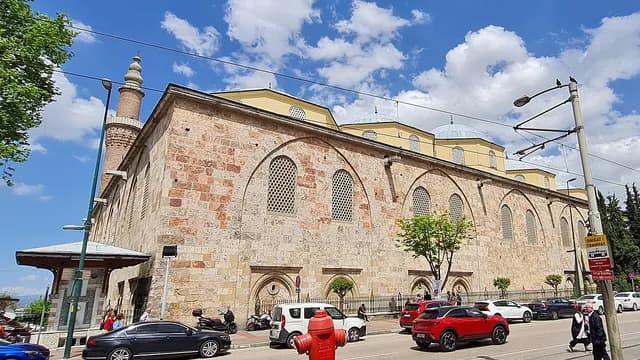
The largest multi-domed mosque of early Ottoman architecture, with twenty domes and an indoor ablution fountain; part of the Bursa and Cumalıkızık UNESCO site.
Celâl Bayar Mausoleum and Museum
Gemlik, Bursa
The mausoleum and birthplace in Umurbey of Celâl Bayar, Türkiye's third President.
Emir Sultan Mosque and Tomb
Yıldırım, Bursa
A complex built in the name of Emir Sultan, son-in-law of Yıldırım Bayezid and a great scholar of his time, famed for its cypress-shaded cemetery.
Fatih Mosque (Tirilye)
Mudanya, Bursa
A building in Tirilye constructed in the Byzantine period as the Church of St. Stephen and converted into a mosque.
Hacı Özbek Mosque
İznik, Bursa
One of the oldest Ottoman mosques whose date is known for certain, with an inscription dated 1333.
Hagia Sophia Orhan Mosque (İznik)
A Byzantine church that hosted the Seventh Ecumenical Council in 787 and was converted into a mosque under Orhan Gazi.
Kemerli Church (Tirilye)
An old church known for its arched facade, reflecting Tirilye's Byzantine-period history.
Orhan Gazi Mosque and Complex
The mosque of the first major Ottoman complex, founded by Orhan Gazi in 1339 in the hans district, which shaped the city's commercial center.
Tombs of Osman Gazi and Orhan Gazi
The side-by-side tombs on the Tophane ridge of Osman Gazi, founder of the Ottoman state, and his son Orhan Gazi.
Yeşil Mosque (Green Mosque, İznik)
A 14th-century mosque commissioned by Çandarlı Kara Halil Hayreddin Paşa, a symbol of İznik with its tiled minaret.
Yeşil Mosque (Green Mosque)
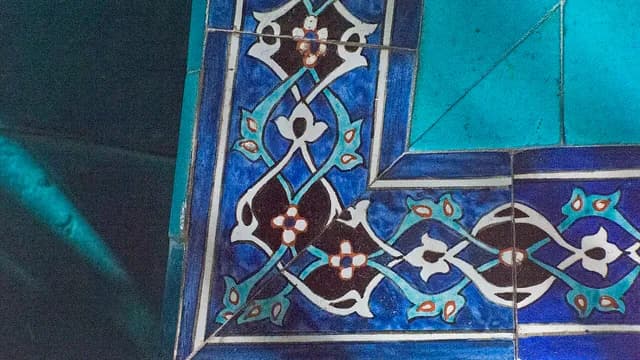
Çelebi Mehmed's mosque, regarded with its tiles and sultan's loge as the peak of early Ottoman decorative art.
Yeşil Türbe (Green Tomb)
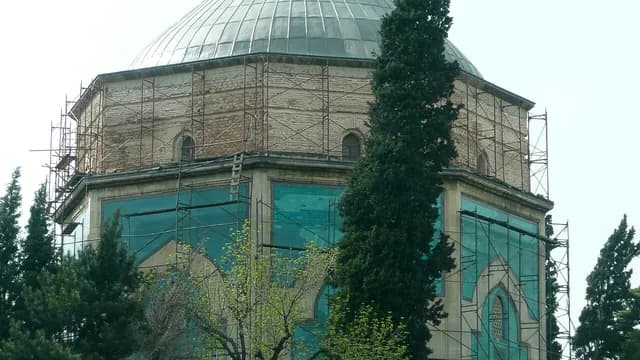
Çelebi Mehmed's tomb, a symbol of Bursa with its octagonal body clad in turquoise tiles.
Aya Paraskevi Holy Spring (Ayazma) and Monastery
Bozcaada, Çanakkale
A holy spring and small Greek monastery among trees above Ayazma Beach.
Behramkale Hüdavendigar Mosque
Ayvacık, Çanakkale
A single-domed stone mosque at the entrance to the Assos acropolis, dating to the reign of Murad I.
Bolayır: Grave of Namık Kemal and Tomb of Süleyman Paşa
Gelibolu, Çanakkale
In Bolayır, at the narrowest neck of the Gallipoli Peninsula, the grave of the 'poet of the homeland' Namık Kemal and the tomb of Süleyman Paşa, conqueror of Rumelia.
Bozcaada Koimisis Theotokou Church
The Church of the Dormition of the Virgin Mary in the Greek quarter, still used by the island's Orthodox community.
Gelibolu Mevlevi Lodge (Mevlevihane)
A Mevlevi lodge founded in the early 17th century, with the largest grounds and a magnificent semahane.
Yazıcıoğlu Mehmed (Muhammediye) Tomb
The tomb in the town center of Yazıcıoğlu Mehmed Efendi, author of the Muhammediye.
Church of Sveti Konstantin and Elena
Merkez, Edirne
A Bulgarian church in Uzunkaldırım, built in 1869 in less than seven months and restored and reopened in 2008.
Darülhadis Mosque
A mosque-madrasa built by Murad II in 1435 on the bank of the Tunca, with princes' tombs on its qibla side.
Enez Hagia Sophia (Fatih Mosque)
Enez, Edirne
The remains inside Enez Castle of a building constructed as a basilica in the 12th century and converted into a mosque after the conquest.
Eski Mosque (Old Mosque)
Edirne's oldest surviving monumental building; an early Ottoman mosque famous for its nine domes and giant calligraphy.
Evliya Kasımpaşa Mosque
A single-domed mosque dated 1478 on the north bank of the Tunca, with steps for those arriving by river; under restoration.
Great Synagogue of Edirne
Türkiye's largest synagogue and one of the largest in Europe; a 1907 building reopened after restoration.
Has Yunus Bey Tomb
The octagonal tomb of Grand Admiral Has Yunus Bey, who led the Ottoman fleet in the conquest of Enez.
Hersekzade Ahmed Paşa Mosque
Keşan, Edirne
A square-plan domed mosque in Keşan, commissioned in 1511 by Grand Vizier Hersekzade Ahmed Paşa and under restoration.
A hilltop mosque built by Murad II as a Mevlevi lodge, known for the early İznik tiles on its mihrab wall.
Selimiye Mosque and Complex
What Mimar Sinan called his 'masterpiece', the pinnacle of Ottoman architecture with its dome and four slender minarets; UNESCO World Heritage.
Sveti Georgi Bulgarian Church
A basilica-plan Bulgarian Orthodox church in the Kıyık quarter, built in 1880 and reopened after restoration in 2004.
Üç Şerefeli Mosque
A mosque showing the transition from early Ottoman to the classical period, with its large fountain courtyard and three-balconied minaret.
Uzunköprü Muradiye Mosque
Uzunköprü, Edirne
One of the largest gable-roofed Ottoman mosques, commissioned by Murad II together with Uzunköprü in 1443.
Ahrida Synagogue
Fatih, İstanbul
One of İstanbul's oldest synagogues, in Balat, in use since the 15th century and known for its ship-shaped teva.
Atik Valide Mosque and Complex
Üsküdar, İstanbul
A large complex on the hilltop of Üsküdar built by Mimar Sinan for Nurbanu Sultan, mother of Murad III.
Beyazıt Mosque
The oldest surviving imperial mosque in İstanbul; Bayezid II's complex on Beyazıt Square.
Bulgarian Church of St. Stephen (Sveti Stefan)
A 19th-century Bulgarian Orthodox church on the Golden Horn, built of prefabricated cast-iron parts.
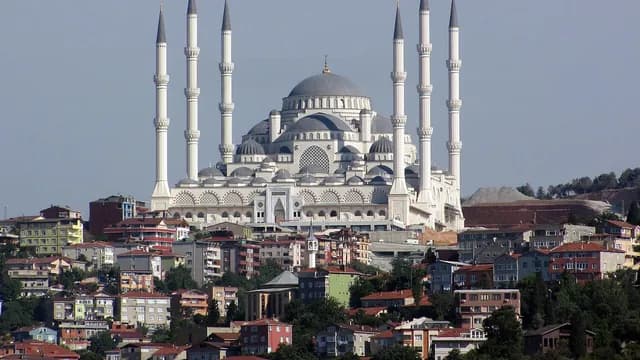
Büyük Çamlıca Mosque
Türkiye's largest mosque, opened in 2019 on Büyük Çamlıca Hill; its six minarets can be seen from many parts of the city.
Church of St. Anthony of Padua (Sent Antuan)
Beyoğlu, İstanbul
İstanbul's largest Catholic church, on İstiklal Caddesi, with a red-brick Neo-Gothic facade.
Church of St. George (Aya Yorgi), Yücetepe
Adalar, İstanbul
The Monastery and Church of St. George (Aya Yorgi) on Yücetepe, the highest hill of Büyükada, known for its wish-making tradition.
Church of St. Mary of the Spring (Balıklı Meryem Ana Rum Kilisesi)
Zeytinburnu, İstanbul
The Greek Orthodox Church of St. Mary of the Spring, of Byzantine origin, outside the land walls, known for its holy spring (ayazma).
A 17th-century mosque in Üsküdar whose interior is covered from top to bottom with İznik tiles.
Ecumenical Patriarchate (Fener Rum Patrikhanesi) and Church of St. George (Aya Yorgi)
The Ecumenical Patriarchate in Fener, historic center of the Orthodox world, and the Church of St. George within it.
Eyüp Sultan Mosque and Tomb
Eyüpsultan, İstanbul
İstanbul's most important place of pilgrimage, beside the tomb of Abu Ayyub al-Ansari, standard-bearer of the Prophet Muhammad.
Fatih Mosque and Complex
The large mosque and complex built by Mehmed the Conqueror on the city's fourth hill after the conquest, with his tomb in its garden.
Ferhat Paşa Mosque
Çatalca, İstanbul
A mosque in central Çatalca built by Mimar Sinan for Ferhad Paşa in 1575.
Genç Osman Mosque
Güngören, İstanbul
A historic mosque in Güngören that gives its name to the neighborhood, built as a small complex by Osman II (Genç Osman) during a hunt.
Gül Mosque (Rose Mosque)
A high-domed mosque in Cibali near the Golden Horn, converted from a Byzantine-era church.
Hagia Sophia Grand Mosque (Ayasofya-i Kebir Camii)
A monumental building completed in 537 as the largest domed basilica of Byzantium, used today as a mosque and regarded as the symbol of İstanbul.
Halki Seminary (Heybeliada Ruhban Okulu) and Monastery of the Holy Trinity (Aya Triada)
A historic school within the Monastery of the Holy Trinity on Heybeliada's Ümit Hill, unable to teach since 1971.
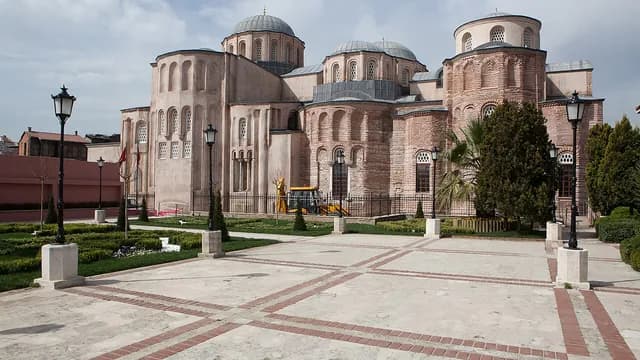
Kariye Mosque (Chora)
The church of the former Chora Monastery, home to the world's finest examples of 14th-century Byzantine mosaics and frescoes; a mosque since 2024.
Kılıç Ali Paşa Mosque
A mosque and complex in Tophane built by Mimar Sinan for Grand Admiral Kılıç Ali Paşa, interpreting Hagia Sophia on a small scale.
Little Hagia Sophia Mosque (Küçük Ayasofya Camii)
A mosque built in the 6th century as the Church of Saints Sergius and Bacchus, one of the domed Byzantine buildings that preceded Hagia Sophia.
Merkez Efendi Mosque and Tomb
A small complex opposite Mevlanakapı with the tomb of Merkez Efendi, the mesir paste tradition and a historic cemetery.
Mihrimah Sultan Mosque (Edirnekapı)
A Mimar Sinan mosque at one of the highest points of the city, known for its light-filled interior with numerous windows.
Mihrimah Sultan Mosque (Üsküdar)
The İskele (Pier) Mosque opposite Üsküdar pier, built by Mimar Sinan for Mihrimah Sultan.
Mimar Sinan Mosque (Ataşehir)
Ataşehir, İstanbul
A large-domed mosque opened in Ataşehir in 2012, interpreting classical Ottoman imperial mosques.
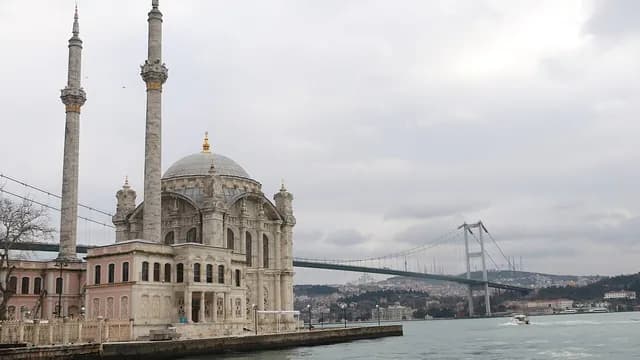
Ortaköy Mosque (Büyük Mecidiye)
Beşiktaş, İstanbul
A mosque right next to the Ortaköy pier that, together with the Bosphorus Bridge, forms one of İstanbul's best-known postcard views.
Piri Mehmet Paşa Mosque
Silivri, İstanbul
A single-domed Ottoman mosque and complex in central Silivri, commissioned by Grand Vizier Piri Mehmed Paşa in 1530–31.
Rüstem Paşa Mosque
A Mimar Sinan mosque rising on a high platform within the Eminönü bazaar quarter, its interior walls covered with İznik tiles.
Sadabad (Çağlayan) Mosque
Kağıthane, İstanbul
A mosque rebuilt in 1863 on the banks of the Kâğıthane Stream, site of the famous Sadabad recreation ground of the Tulip Era.
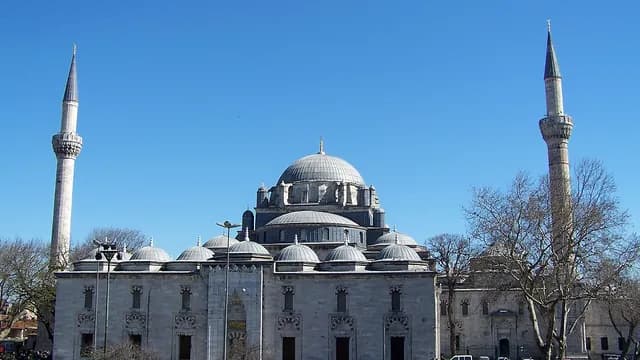
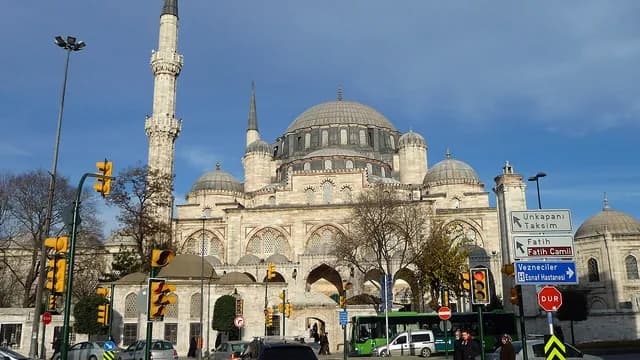
Şehzade Mosque
The mosque Mimar Sinan called his 'apprentice work', built for Şehzade Mehmed, Süleyman the Magnificent's son who died young.
Şemsi Paşa Mosque
A small, elegant mosque and madrasa by Mimar Sinan on the Üsküdar shore, known for its position right at the water's edge.
Sokollu Mehmet Paşa Mosque (Kadırga)
A small Mimar Sinan mosque on the Kadırga slope, known for its finest İznik tiles and pieces of stone believed to have been brought from the Kaaba.
Sokullu Mehmet Paşa Mosque (Büyükçekmece)
Büyükçekmece, İstanbul
The remains of a Mimar Sinan mosque at the head of the Kanuni Bridge, notable for its minaret carved from a single piece of stone.
Süleymaniye Mosque and Complex
The magnificent mosque and complex built by Mimar Sinan for Süleyman the Magnificent on a hill overlooking the Golden Horn.
Sultanahmet Mosque (Blue Mosque)
A six-minaret 17th-century imperial mosque, also known as the 'Blue Mosque' for the blue-toned İznik tiles of its interior.
Sancaktepe, İstanbul
The grave in Samandıra of Abdurrahman Gazi, the Ottoman frontier lord who conquered Aydos Castle in the reign of Orhan Gazi.
Tomb of Barbaros Hayreddin Paşa
The tomb on the Beşiktaş shore of Barbaros Hayreddin Paşa, the most famous admiral in Ottoman naval history.
Yeni Cami (New Mosque), Eminönü
A 17th-century imperial mosque rising on Eminönü square, whose construction took over half a century and which is associated with the names of two valide (queen mother) sultans.
Zeyrek Mosque (Pantokrator)
A mosque converted from the 12th-century Pantokrator Monastery, made up of three Byzantine churches joined together.
Aya Nikola Rock Monastery
Vize, Kırklareli
A rock-cut monastery in Kıyıköy dating to the time of Justinian, with a church and a holy spring.
Cedid Ali Paşa (Semiz Ali Paşa) Mosque
Babaeski, Kırklareli
The mosque commissioned from Mimar Sinan by Semiz Ali Paşa, a symbol of Babaeski with its broad dome.
Karakaş Bey Mosque
Merkez, Kırklareli
A mosque in the city center, commissioned in the 17th century by Karakaş Hacı Mehmet Bey and later rebuilt.
Vize Little Hagia Sophia (Gazi Süleyman Paşa Mosque)
Vize's basilica, known as the Little Hagia Sophia, built as a church in the Byzantine period and converted into a mosque.
Akçakoca Bey Mausoleum
Kandıra, Kocaeli
The mausoleum of Akçakoca Bey, one of Osman Gazi's commanders, who is held to have given his name to Kocaeli.
Armaş (Charkhapan Surp Asdvadzadzin) Monastery Ruins
İzmit, Kocaeli
The ruins of a monastery near Akmeşe, founded in the 17th century and once an important Armenian religious and educational center.
Karabali Mehmet Bey Mosque
Karamürsel, Kocaeli
The mosque of Kara Bali Bey's complex in Karamürsel, opened for worship in 1532 and reopened in 2019 after restoration by the General Directorate of Foundations.
Orhan Mosque (İzmit)
The city's oldest Ottoman mosque, built in the time of Orhan Gazi after İzmit passed to the Ottomans.
Pertev Paşa (Yeni Cuma) Mosque
İzmit's most important Ottoman mosque, completed by Mimar Sinan in 1579 for the vizier Pertev Mehmed Paşa.
Uzundere Wooden Mosque
A village mosque in Uzundere, Karamürsel, rebuilt in 1905, whose minbar, gallery and ceilings preserve wooden decoration in natural dyes.
Büyükesence Orhan Mosque
Erenler, Sakarya
A mosque in Büyükesence village in Erenler, known by the name of Orhan Gazi and regarded as one of the oldest Ottoman buildings in the region.
Rüstem Paşa Mosque (Sapanca)
Sapanca, Sakarya
The mosque surviving from the staging complex on the Istanbul–Baghdad road of Rüstem Paşa, grand vizier under Süleyman the Magnificent.
Şeyh Muslihiddin Mosque
Kaynarca, Sakarya
A wooden mosque in Kaynarca built in 1486, in the reign of Bayezid II, using the çantı technique without a single nail.
Yunus Paşa (Kurşunlu) Mosque
Taraklı, Sakarya
A 16th-century mosque in Taraklı commissioned by Yunus Paşa, grand vizier of Selim I, known for its lead-covered dome.
Ayas Paşa Mosque
Saray, Tekirdağ
A 16th-century mosque commissioned by Grand Vizier Ayas Mehmed Paşa, with the graves of Crimean khans in its courtyard.
Çorlu Süleymaniye Mosque
Çorlu, Tekirdağ
Çorlu's large-domed mosque, begun in 1521, in the years when Süleyman the Magnificent came to the throne.
Gazi Ömer Bey Mosque
Malkara, Tekirdağ
A 15th-century mosque with the tomb of Turhanoğlu Ömer Bey, an akıncı commander of the Conqueror's era, in its courtyard.
Güzelce Hasan Bey Mosque
Hayrabolu, Tekirdağ
The Ulu Mosque completed in 1499 by Güzelce Hasan Bey, son-in-law of Bayezid II, studied for its lighting and acoustics.
Orta Mosque
Süleymanpaşa, Tekirdağ
A neighborhood mosque in central Tekirdağ, rebuilt in 1856 and known for its woodwork.
The single-domed mosque of the complex commissioned from Mimar Sinan by Grand Vizier Rüstem Paşa in 1553–54.
Hersekzade Ahmed Paşa Mosque and Tomb
Altınova, Yalova
The mosque commissioned in Hersek village by Hersekzade Ahmed Paşa, five times grand vizier, and his tomb beside it.
Abdülkadir Ağa Mosque
Ceyhan, Adana
The historic mosque of the Ceyhan district center.
Adana Ulu Mosque (Grand Mosque)
Seyhan, Adana
The 16th-century complex of the Ramazanoğulları beylik, known for its tile decoration and alternating-color stonework.
Bebekli Church (Church of Saint Paul, Catholic)
A Catholic church popularly known as the "Bebekli Kilise" (Church with the Baby) because of the statue of the Virgin Mary atop its bell tower.
Hoşkadem (Kozan Ulu) Mosque
Kozan, Adana
Kozan's oldest mosque, built in the 15th century in the Mamluk period.
Sabancı Central Mosque
One of Türkiye's largest mosques, rising with its six minarets on the banks of the Seyhan.
Yağ Mosque
One of Adana's oldest mosques, converted from a church in the 16th century.
Abdal Musa Lodge (Tekke) and Tomb
Elmalı, Antalya
A historic lodge in Tekke village, Elmalı, housing the tomb of Abdal Musa and where commemorative festivities are held every year.
Church of St. Nicholas (Santa Claus)
Demre, Antalya
A Byzantine basilica housing the tomb of St. Nicholas, Bishop of Myra, who inspired the figure of Santa Claus; today a monument museum.
Kesik Minare (Korkut Mosque)
Muratpaşa, Antalya
One of the most interesting buildings in Kaleiçi, with a layered past as a Roman temple turned church turned mosque.
Murat Paşa Mosque
A classical-period Ottoman mosque built in 1570 that gave its name to the district.
Ömer Paşa Mosque and Complex
The largest Ottoman mosque in the Antalya region, commissioned by Ketenci Ömer Paşa in the early 17th century.
Tekeli Mehmet Paşa Mosque
An Ottoman-era mosque at Kalekapısı, right next to the Clock Tower.
Yivli Minare Mosque
A 13th-century Seljuk monument that has become Antalya's symbol, with its fluted brick minaret at the entrance to Kaleiçi.
Burdur Ulu Mosque (Grand Mosque)
Merkez, Burdur
The city's oldest mosque, on a high hill, commissioned in 1300 by Hamitoğlu Dündar Bey.
Dengere Mosque
Çavdır, Burdur
A 15th–16th-century village mosque in Dengere village known for its extraordinary woodwork.
Şeyh Sinan Mosque
One of the city's old mosques, with a minaret of Burdur stone and scholars' graves in its graveyard.
Veli Dede Tomb
Yeşilova, Burdur
A ten-sided, Seljuk-style tomb from the 14th century in Onacak village.
Antakya Catholic Church
Antakya, Hatay
A Catholic church set up in a traditional Antakya house near Kurtuluş Caddesi; affected by the earthquake.
Antakya Greek Orthodox (St. Paul) Church
The late 19th-century church of Antakya's Greek Orthodox community; largely destroyed in the 2023 earthquake, with reconstruction work on the agenda.
Antakya Synagogue
A late 19th-century synagogue on Kurtuluş Caddesi; heavily damaged in the earthquake, with renovation work ongoing.
Antakya Ulu Mosque (Grand Mosque)
A Mamluk-period mosque in the heart of the Uzun Çarşı; heavily damaged in the earthquake, its restoration is ongoing.
Church of St. Pierre (St. Peter's Cave Church)
A cave church carved into the slope of Mount Habib-i Neccar (Staurin), considered one of the oldest places of worship of Christianity; reopened to visitors after the earthquake.
Habib-i Neccar Mosque
A historic mosque considered the first mosque in Anatolia; largely destroyed in the earthquake, it was faithfully restored and reopened for worship in December 2025.
Hızır Makamı (Shrine of Hızır)
Samandağ, Hatay
A shrine of Hızır on the Samandağ shore, visited by people of different faiths for vows and prayer.
İskenderun Cathedral of the Annunciation (Meryem Ana / Müjde Catholic Cathedral)
İskenderun, Hatay
The cathedral of the Apostolic Vicariate of Anatolia; largely destroyed in the 2023 earthquake.
Monastery of St. Simeon
The 6th-century monastery remains on the hill where St. Simeon Stylites the Younger lived on a pillar.
Yayladağı Greek Orthodox Church
Yayladağı, Hatay
A historic Greek Orthodox church in central Yayladağı; visits require permission.
Aya Payana Church
Merkez, Isparta
A historic 18th-century church left by Isparta's Greek Orthodox community.
Church of St. Stephen (Aya Stefanos)
Eğirdir, Isparta
A three-aisled Greek Orthodox church on Yeşilada from the second half of the 19th century.
Devlethan Mosque
Yalvaç, Isparta
A historic mosque in the middle of the Yalvaç bazaar, known for its woodwork.
Firdevs Bey (Mimar Sinan) Mosque
A classical Ottoman mosque dated 1561, attributed to Mimar Sinan and a symbol of the city center.
Hızır Bey Mosque
Eğirdir's historic Ulu Mosque (Grand Mosque), opposite the Dündar Bey Madrasa.
Kutlubey (Ulu) Mosque
The city's Ulu Mosque (Grand Mosque), from the Hamidid period, dated to the early 15th century.
Şeyh Ahmet Mosque and Tomb
Senirkent, Isparta
A small group of buildings in Senirkent, made up of a mosque, an adjoining imam's house and tomb, a graveyard, a separate tomb and a minaret, notable for its spolia stones.
Uluborlu Alaaddin (Ulu) Mosque
Uluborlu, Isparta
A mosque in Old Uluborlu, built in 1231 by a woman of the Seljuk dynasty.
Çağlayancerit Ulu Mosque (Grand Mosque)
Çağlayancerit, Kahramanmaraş
The historic Ulu Mosque in the Çağlayancerit district center.
Elbistan Ulu Mosque (Grand Mosque)
Elbistan, Kahramanmaraş
Elbistan's historic Ulu Mosque, also known as the Alaüddevle Bey Mosque; earthquake impact recorded.
Eshab-ı Kehf Complex
Afşin, Kahramanmaraş
A complex built over the cave of the Seven Sleepers, including a Seljuk-period ribat and han.
Göksun Ulu Mosque (Grand Mosque)
Göksun, Kahramanmaraş
The historic Ulu Mosque in the Göksun district center; earthquake impact recorded.
Dulkadiroğlu, Kahramanmaraş
An early 16th-century Dulkadirid mosque attributed to Ayşe Hatun, mother of Sultan Selim I.
İklime Hatun Mosque
A small historic mosque of the Dulkadirid period within the historic bazaar.
Kahramanmaraş Ulu Mosque (Grand Mosque)
The landmark building of the Dulkadirid period; heavily damaged in the earthquake, it was restored and reopened for worship on the Night of Power in March 2026.
A historic mosque within the saddlers' bazaar; among the mosques restored and reopened for worship after the earthquake.
Alahan Monastery
Mut, Mersin
A monastery on the UNESCO Tentative List on a slope overlooking the Göksu valley, with 5th-century basilicas and rich stone decoration.
Ashab-ı Kehf (Seven Sleepers) Cave
Tarsus, Mersin
A cave and the mosque beside it, associated with the story of the Seven Sleepers told in the Quran and in Christian tradition.
Ayatekla Archaeological Site
Silifke, Mersin
An underground church and basilica remains dedicated to St. Thecla, considered one of the first female martyrs of early Christianity.
Church of St. Paul (Tarsus)
A church built in the 19th century, known for its ceiling frescoes and toured today as a memorial museum.
Laal Paşa Mosque
A domed, arcaded historic mosque built in the 15th century in the Karamanid period.
Makam Mosque and Shrine of the Prophet Daniel
A mosque housing the shrine attributed to the Prophet Daniel, beneath which Roman-period bridge remains can be seen.
Mersin Orthodox Church
Akdeniz, Mersin
A church built in the 19th century for the city's Greek Orthodox community, known for its wooden iconostasis and still open for worship.
Mersin Ulu Mosque (Grand Mosque)
The main mosque in the city center, in the middle of the bazaar, which rose with Mersin's modern urbanization.
Muğdat Mosque
Yenişehir, Mersin
A large mosque opened for worship in the 1980s, one of the symbols of the Mersin skyline with its six minarets.
Saint Anthony Latin Catholic Church
A Catholic church built in the second half of the 19th century, whose bell tower is also known as the Mersin Clock Tower.
St. Paul's Well
An ancient well believed to be in the courtyard of St. Paul's house; a stop for Christian pilgrims.
Tarsus Eski Cami (Old Mosque / Kilise Camii)
The city's oldest mosque, created by converting a 12th-century Gothic church into a mosque.
Tarsus Ulu Mosque (Grand Mosque)
A historic mosque with a large arcaded courtyard, built in the 16th century in the Ramazanid period.
Kadirli Alacami
Kadirli, Osmaniye
A historic building converted from a church into a mosque, bearing traces of the Roman, Byzantine and Turkish periods.
Tomb of Hz. Safvan bin Muattal
Samsat, Adıyaman
The tomb and pilgrimage site of Safvan bin Muattal, a Companion of the Prophet who took part in the Byzantine campaigns and is believed to have been martyred in Samsat.
Tut Ulu Mosque
Tut, Adıyaman
A historic mosque in the Tut district center, commissioned by Hacı Hasan in 1736.
Er-Rızk Mosque
Hasankeyf, Batman
The inscribed minaret and portal of the mosque commissioned by the Ayyubid malik Süleyman in 1409; moved to the Archaeopark in 2019 before the waters rose.
Hıdır Bey Mosque
Kozluk, Batman
A historic building commissioned in 1512 by Hızır (Hıdır) Bey, son of Ebubekir, the bey of Sason, referred to as the largest mosque in Kozluk.
İbrahim Bey Mosque
A mosque in Kozluk's historic Kale neighborhood, repaired in 1705 by İbrahim Bey of the Garzan tribe, known for its minaret with geometric decoration.
İmam Abdullah Zaviye and Tomb
One of Hasankeyf's most visited tombs; a zaviye moved to the Archaeopark in 2018-2019 together with the graves around it.
Mor Kiryakus Monastery
Beşiri, Batman
A Syriac monastery in Ayrancı village at the foot of Mount Kıra, dated to the 5th century and opened to tourism in 2025 after a three-stage restoration.
Gercüş, Batman
The tomb of Seyyid Bilal, a 12th-century holy figure, in the village of Vergili (Becirman) in Gercüş; one of the most visited places of faith in the region.
Zeynel Bey Tomb
A cylindrical tomb with turquoise tiles built for the son of the Akkoyunlu ruler Uzun Hasan; moved in one piece in 2017 to the Culture Park in new Hasankeyf.
Behram Paşa Mosque
Sur, Diyarbakır
A basalt Ottoman mosque attributed to Mimar Sinan, built between 1564 and 1572 by Governor Behram Paşa.
Çermik Ulu Mosque (Grand Mosque)
Çermik, Diyarbakır
A mosque built in two separate periods, its portal surviving from the Artuqid period, also known as the Sultan Alaaddin Mosque.
Diyarbakır Ulu Mosque (Grand Mosque)
The Ulu Mosque, considered one of the oldest mosques in Anatolia, forming an ensemble with the Mesudiye and Zinciriye madrasas.
Fatih Paşa (Kurşunlu) Mosque
A mosque known for its lead-clad dome, built in 1516–1520 by Bıyıklı Mehmed Paşa, the city's first Ottoman governor.
Hani Ulu Mosque (Grand Mosque)
Hani, Diyarbakır
A historic mosque of yellow limestone with a flat roof, north of the Aynü'l Kebir spring, restored in 2022.
Hazreti Süleyman Mosque
A mosque dated 1160 leaning against the walls of İç Kale, an important place of pilgrimage with its tomb containing the graves of Companions of the Prophet.
Hazro Ulu Mosque (Grand Mosque)
Hazro, Diyarbakır
A historic mosque in the Hazro district center, whose original single-domed square plan was enlarged with later additions.
İskender Paşa Mosque
A single-domed 16th-century mosque with alternating black-and-white stone walls, commissioned by Governor Çerkes İskender Paşa.
Lice Ulu Mosque (Vakıf Ahmet Bey Mosque)
Lice, Diyarbakır
A historic white-stone mosque built in 1540 by Vakıf Ahmet Bey, emir of Atak, which also contains the founder's grave.
Mar Petyun Chaldean Church
A Chaldean Catholic church built in the 17th century, still in use in Diyarbakır by its small community.
Melek Ahmed Paşa Mosque
A two-story Ottoman mosque with a tiled mihrab, vaulted spaces on its ground floor and an abbara passage to the street.
Mount Zülküf (Makam Dağı)
Ergani, Diyarbakır
A twin-peaked mountain north of Ergani with the shrine of the Prophet Zülküf, the ruined Church of the Virgin Mary and castle remains.
Nebî Mosque
A single-domed Akkoyunlu-period mosque near Dağ Kapı, known for its minaret with alternating black and white stone courses.
Safa (Parlı) Mosque
An Akkoyunlu mosque attributed to the reign of Uzun Hasan, known for its decorated minaret and bright interior.
Şeyh Mutahhar Mosque and the Four-Legged Minaret
An Akkoyunlu mosque famous for its minaret rising on four slender stone columns, regarded as the only one of its kind in Anatolia.
Silvan Ulu Mosque (Selahaddin-i Eyyubi Mosque)
Silvan, Diyarbakır
A pioneering Anatolian mosque with a large dome in front of the mihrab, built in 1152–1157 by the Artuqid ruler Necmeddin Alpi.
Surp Giragos Armenian Church
A historic church considered one of the largest Armenian churches in the Middle East, reopened in 2022 after restoration.
Tombs of the Prophets on Ziyaret Hill (Prophet Zülkifl and Prophet Elyesa)
Eğil, Diyarbakır
The graves of the prophets Zülkifl and Elyesa, moved to Ziyaret Hill in 1995 so that they would not be submerged by the dam waters.
Virgin Mary Ancient Syriac Church (Meryem Ana Süryani Kadim Kilisesi)
An active Syriac Orthodox church with two courtyards, believed to date back to the 3rd century.
Alaüddevle Mosque
Şahinbey, Gaziantep
A historic mosque built before 1515 in the time of the Dulkadirid Alaüddevle Bozkurt Bey, whose mihrab bears traces of church architecture.
Boyacı Mosque
One of the city's oldest mosques, part of whose minbar bears an inscription dated 1357, known for its unique minbar that slides into the wall on rails.
Fevkani Church
Nizip, Gaziantep
A historic church in Nizip's Fevkani neighborhood, dated to the 12th century and restored thanks to a residents' petition campaign.
Gaziantep Synagogue
A two-story stone synagogue left by the city's Jewish community, restored in 2012.
Kurtuluş Mosque
A building designed by Sarkis Balyan, built in 1892–1893 as the Cathedral of the Virgin Mary (Surp Asdvadzadzin) and used as a mosque since the 1980s.
Ömer Ersoy Cultural Center (Church of St. Peter / Aziz Bedros)
A historic Armenian church reported to date from 1723, uncovered during road works in 2005 and converted into a cultural center.
Şirvani Mosque
A historic mosque just southwest of the castle, known for its two-balcony minaret and its sliding minbar set into the wall; its post-earthquake repairs were completed in 2025.
Akçurun Mosque
Merkez, Kilis
A historic Kilis mosque dated to the end of the Mamluk period, given as 1515 in the TDV Encyclopedia of Islam.
Çalık Mosque
A historic mosque dated 1683, one of the typical examples of Kilis's Ottoman-period neighborhood mosques.
An Ottoman-period mosque near the historic bazaar, built in the 17th century and repaired in 1822.
Kilis Mevlevi Lodge (Mevlevihane)
A Mevlevi lodge whose door inscription is read as 1525–1526, which also served as a way-station for travelers on the road to Syria and the Hejaz; today only its semahane stands.
Kilis Ulu Mosque (Grand Mosque)
The city's oldest and largest mosque, dating from the Mamluk period; it has preserved its original architecture since the 14th century.
Babüssur (Melik Mahmud) Mosque
Artuklu, Mardin
A 14th-century Artuqid mosque built around 1364-1365 according to its door inscription, with a transverse prayer hall domed in the middle and a tomb.
Chaldean Church (Mar Hırmız)
A church belonging to the Chaldean Catholic community, known for its domed structure, metropolitans' graves and a fireplace with a tughra dated 1902.
Church of the Virgin Mary, Anıtlı (Hah)
Midyat, Mardin
One of the most original churches of Tur Abdin, in the village of Anıtlı, with its square plan and central dome; in Syriac, Yoldath Aloho (Mother of God).
Derik Surp Kevork (Red) Church
Derik, Mardin
Built in 1650, the oldest church still standing in Derik, called the Red Church because of the red earth used in its construction.
Deyrulzafaran (Mor Hananyo) Monastery
A historic, still-active monastery on the slope overlooking the plain east of Mardin, for centuries the seat of the Syriac Orthodox Patriarchate.
Kıllıt (Dereiçi) Mor Yuhanon Church
Savur, Mardin
The only church open for worship in Kıllıt (Dereiçi), a largely emptied former Syriac village; restored in 2006.
Kırklar (Mor Behnam) Church (Church of the Forty Martyrs)
A historic church built in the 6th century in the name of Mor Behnam and his sister Saro, today the seat of the Syriac Orthodox Metropolitanate of Mardin.
Kızıltepe (Dunaysır) Ulu Mosque (Grand Mosque)
Kızıltepe, Mardin
An Artuqid mosque with rich stone decoration, begun by the Artuqid Yavlak Arslan and completed by his brother Artuk Arslan in the early 13th century.
Latifiye (Abdüllatif) Mosque
A mosque built in 1371, one of the last Artuqid works in Mardin, with an ornate portal of two-colored stones and later woodwork.
Mardin Ulu Mosque (Grand Mosque)
The oldest and most important mosque of the city, from the Artuqid period, a symbol of the old Mardin skyline with its segmented dome and single minaret.
Mor Barsavmo Church
A church in the Işıklar neighborhood, rebuilt in 1943 on 5th-century foundations, where the Syriac congregation continues to hold services.
Mor Evgin Monastery
Nusaybin, Mardin
A Syriac monastery on the slope of Mount İzla at an elevation of about 900 meters, believed to have been founded in the 4th century by the Egyptian monk Mor Evgin.
Mor Gabriel (Deyrulumur) Monastery
Founded in 397, one of the world's oldest standing and active Syriac Orthodox monasteries, on an oak-covered hill on the Tur Abdin plateau.
Mor Hobil – Mor Abrohom Monastery
A Syriac monastery 1 km from central Midyat, founded in the 5th century by two monks trained at Mor Gabriel and still in use today.
Mor Mihail Church
A Syriac Orthodox church south of the old city, outside the walls, with a bell tower and vaulted burial chambers.
Mor Şimuni Church
An active Syriac Orthodox church in the Teker neighborhood, dated to the 6th century with a plan similar to the Kırklar Church.
Mor Yakup Monastery (Barıştepe)
A 6th-century Syriac Orthodox monastery in the village of Barıştepe (Salah), dedicated to the hermit Mor Yakub, notable for its five-sided apse.
Nusaybin Mor Yakup Church
One of the oldest churches of Upper Mesopotamia, built in the 4th century by Mor Yakup, bishop of Nusaybin; Mor Yakup's grave is inside.
Ömerli Mor Cercis (Gevergis) Church
Ömerli, Mardin
The Mor Cercis (Gevergis) Church in the Ömerli district center, left by the Syriacs, restored and reopened for worship.
Şahkulu Bey Kümbet (Tomb)
A historic kümbet in Kızıltepe, said to date from the Artuqid period, where three graves were found inside during the 2021 restoration.
Savur Ulu Mosque (Grand Mosque)
A stone mosque built in the second half of the 19th century within the historic fabric of Savur.
Şehidiye Mosque and Madrasa
A notable building on 1. Cadde, built as a madrasa in the 13th century, with a finely crafted minaret said to have been built without scaffolding.
Şeyh Çabuk Mosque
A small historic mosque on 1. Cadde that took its present appearance in the 15th century, known for the transverse plan typical of Mardin's mosques.
Tomb of Pir Hattap
Mazıdağı, Mardin
A tomb in the Ömürlü neighborhood of Mazıdağı visited by local people for prayer on Thursday and Friday nights.
Zeynel Abidin Mosque and Complex
A complex dated to the 12th century, housing the tombs of Zeynel Abidin and his sister Sitti Zeynep; just west of the Mor Yakup Church.
Birecik Ulu Mosque (Grand Mosque)
Birecik, Şanlıurfa
Birecik's oldest mosque, commissioned in 1365 by the Mamluk Sultan Melik Eşref Şaban according to its damaged inscription.
Fırfırlı Mosque (Church of the Twelve Apostles)
Eyyübiye, Şanlıurfa
A building that was formerly the Church of the Twelve Apostles, notable for its three-aisled basilical plan, converted into a mosque in 1956.
Germuş Church
Haliliye, Şanlıurfa
A two-story historic Armenian church still standing in Dağeteği at the foot of Germuş Dağı, with a facade of three pointed arches.
Halil-ür Rahman Mosque and Madrasa
A historic mosque and madrasa on the south shore of Balıklıgöl, whose square-shafted minaret from the Ayyubid period is reflected in the lake.
Hasan Padişah Mosque
A historic mosque attributed to the Akkoyunlu ruler Uzun Hasan, dated to the second half of the 15th century and reopened in 2025 after the earthquake.
Mevlid-i Halil Mosque and the Cave Where Abraham Was Born
The cave where the Prophet Abraham is believed to have been born, and the mosque and dergâh buildings that grew up around it; Şanlıurfa's main place of pilgrimage.
Reji Church (Church of St. Peter and St. Paul)
A church built in 1861 for the Syriac community, named 'Reji' because it was later used as a tobacco depot, and converted into a cultural center.
Rızvaniye Mosque
An Ottoman-period mosque and madrasa whose long arcaded courtyard covers the entire north shore of Balıklıgöl.
Şanlıurfa Ulu Mosque (Grand Mosque)
The city's grand mosque, thought to have been built in the 12th century in place of an old church called the 'Red Church', with a clock later added to its minaret.
Selahaddin Eyyubi Mosque
A large stone building on the site of the Church of St. John commissioned by Bishop Nona in the 5th century, repaired and converted into a mosque in 1993.
Shrine of Patience of the Prophet Eyyüp (Hz. Eyyüp Peygamber Sabır Makamı)
A shrine with the cave where the Prophet Job is believed to have endured his suffering patiently throughout his illness, and a well considered to have healing water.
Siverek Ulu Mosque (Grand Mosque)
Siverek, Şanlıurfa
Siverek's historic mosque, considered one of the oldest mosques in the region thanks to the 1190 repair inscription on its minaret.
Tomb of Prophet Eyyüp (Viranşehir)
Viranşehir, Şanlıurfa
A faith center in the village of Eyyüp Nebi in Viranşehir, attributed to the Prophet Job, the symbol of patience; nearby are graves held to belong to his wife Rahime Hatun and the Prophet Elisha.
Siirt Ulu Mosque (Grand Mosque)
Merkez, Siirt
A historic mosque repaired in 1129 by the Iraqi Seljuk ruler Mugīsüddin Mahmud, a symbol of Siirt with its minaret decorated with glazed brick.
Tomb of İsmail Fakirullah
Tillo, Siirt
An 18th-century tomb commissioned by Erzurumlu İbrahim Hakkı for his teacher, famous for its mechanism that casts sunlight onto the sarcophagus on the mornings of 21 March and 23 September.
Tomb of Şeyh İbrahim el-Mücahid
The tomb of İbrahim el-Mücahid, a 13th-century saint of Tillo and son of Şeyh Hamza el-Kebir, a few steps from the Tomb of İsmail Fakirullah.
Tomb of Şeyh Osman
Baykan, Siirt
A registered building on a hill near the Veysel Karani Tomb, consisting of a masjid of Ahlat stone and a tomb section with a sarcophagus.
Veysel Karani Tomb and Complex
A complex in the town of Veyselkarani in Baykan, consisting of the shrine-tomb of Veysel Karani, also described by Evliya Çelebi, and its mosque, receiving visitors year-round.
Church of the Virgin Mary (İdil)
İdil, Şırnak
A historic church in the district center of İdil (Syriac: Azakh), belonging to the Syriac Orthodox community and still open for worship today.
Cizre Ulu Mosque (Grand Mosque)
Cizre, Şırnak
Cizre's oldest mosque, thought to have been converted from a church, known for its brick minaret dated 1155 and its famous bronze door knockers with dragons.
Tomb and Mosque of the Prophet Noah (Hz. Nuh)
The region's main place of pilgrimage, in Cizre's Dağkapı neighborhood, with the grave believed to belong to the Prophet Noah in the basement beneath the mosque.
Tomb of Mem û Zîn and the Abdaliye (Mir Abdal) Madrasa
The tomb where Mem and Zin, the heroes of the 15th-century Cizre love story immortalized by Ahmed-i Hani, are believed to rest, beside the Mir Abdal Mosque-Madrasa.