47 · City guide
Mardin
Province of the stone city overlooking Mesopotamia and the monasteries of Tur Abdin
Mardin is a city built in terraces on the southern slope of a mountain overlooking the Mesopotamian plain, known for its limestone houses. The city was the seat of the Mardin branch of the Artuqid Beylik from the early 12th century to the 15th century; highlights from this period include the Ulu Mosque (Grand Mosque), the Zinciriye (Sultan İsa) Madrasa and the Kasımiye Madrasa, completed in the Aq Qoyunlu period. Hans, bazaars and mosques line Birinci Cadde (First Street) and the Uzun Çarşı (Long Bazaar), while churches and mansions line the narrow streets and arched abbaras (vaulted passages). The Deyrulzafaran Monastery east of the city housed the Syriac Orthodox Patriarchate for centuries. In Dara to the southeast, you can visit cisterns, rock tombs and water structures from the Roman–Byzantine period. To the east, Midyat attracts visitors with its stone mansions and telkâri (silver filigree) masters, and the surrounding Tur Abdin region with still-active Syriac monasteries such as Mor Gabriel. Sembusek, ikbebet, kaburga dolması (stuffed lamb ribs) and imlebbes are among the registered specialties of Mardin cuisine.
Machine translated — This content was machine-translated and may differ from the original Turkish text.49
Places
0
Routes
0
Badges
Where shall we explore?
 Machine translated — This content was machine-translated and may differ from the original Turkish text.
Church
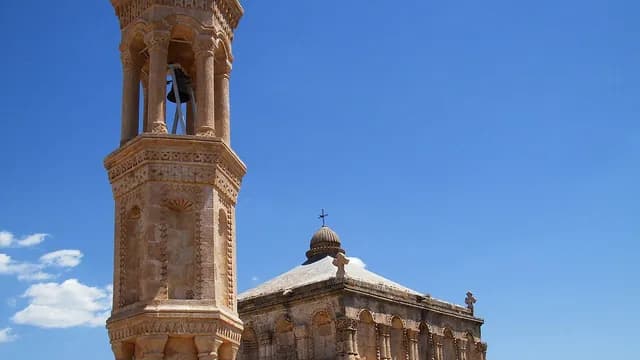
Church of the Virgin Mary, Anıtlı (Hah)
Midyat, Mardin
One of the most original churches of Tur Abdin, in the village of Anıtlı, with its square plan and central dome; in Syriac, Yoldath Aloho (Mother of God).
 Machine translated — This content was machine-translated and may differ from the original Turkish text.
Mosque
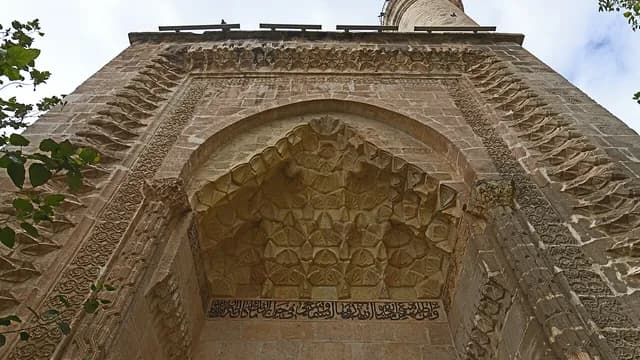
Babüssur (Melik Mahmud) Mosque
Artuklu, Mardin
A 14th-century Artuqid mosque built around 1364-1365 according to its door inscription, with a transverse prayer hall domed in the middle and a tomb.
- Machine translated — This content was machine-translated and may differ from the original Turkish text.
Bridge
Başkavak Bridge
Savur, Mardin
A 14-span stone bridge over the Savur Çayı, built in 1755 and repaired in 1861 according to its inscription.
- Machine translated — This content was machine-translated and may differ from the original Turkish text.
Waterfall
Beşdeğirmen (Emrud) Waterfalls
Kızıltepe, Mardin
Waterfalls hidden among the mountains, resembling travertines with their stepped flow, flowing exuberantly especially in spring.
- Machine translated — This content was machine-translated and may differ from the original Turkish text.
Picnic area
Beyazsu (Çağ Çağ Stream) Picnic Area
Midyat, Mardin
A streamside rest area around the Beyazsu spring, which forms the Çağ Çağ stream between Midyat and Nusaybin, visited to cool off in summer.
- Machine translated — This content was machine-translated and may differ from the original Turkish text.
Archaeological site
Çelbira Ancient Grape Press
Artuklu, Mardin
An ancient wine and pekmez press dating to the 4th century, where 105 cisterns and 10 grape-crushing areas were uncovered on slopes with rock-cut tombs.
 Machine translated — This content was machine-translated and may differ from the original Turkish text.
Archaeological site
Dara Ancient City
Artuklu, Mardin
A garrison city on the Eastern Roman border with the Sasanians; an archaeological site in the village of Oğuz (Dara) with giant cisterns, a necropolis of rock tombs and wall remains.
 Machine translated — This content was machine-translated and may differ from the original Turkish text.
Bazaar and arasta
Dargeçit Historic (Syriac) Bazaar
Dargeçit, Mardin
A historic bazaar reflecting the ancient Syriac past of Dargeçit (Kerburan) with its stone buildings and narrow streets.
 Machine translated — This content was machine-translated and may differ from the original Turkish text.
Church
Derik Surp Kevork (Red) Church
Derik, Mardin
Built in 1650, the oldest church still standing in Derik, called the Red Church because of the red earth used in its construction.
- Machine translated — This content was machine-translated and may differ from the original Turkish text.
Castle
Dermetinan Castle
Mazıdağı, Mardin
The ruins of a Byzantine castle perched like an eagle's nest on a 150-meter hill, which Timur's armies are said to have captured only in 20 days.
 Machine translated — This content was machine-translated and may differ from the original Turkish text.
Monastery
Deyrulzafaran (Mor Hananyo) Monastery
Artuklu, Mardin
A historic, still-active monastery on the slope overlooking the plain east of Mardin, for centuries the seat of the Syriac Orthodox Patriarchate.
- Machine translated — This content was machine-translated and may differ from the original Turkish text.
Madrasa and külliye (complex)
Emineddin Complex (Külliye)
Artuklu, Mardin
A group of buildings attributed to the Artuqid Sultan Necmeddin İlgazi and his brother Emineddin, one of the earliest known külliyes in Anatolia, with Mardin's oldest hamam.
- Machine translated — This content was machine-translated and may differ from the original Turkish text.
Hammam (Turkish bath)
Emir Hamamı (Emir Bath)
Artuklu, Mardin
A historic hamam south of the main street in old Mardin, whose plan resembles Roman-period baths, still in use.
- Machine translated — This content was machine-translated and may differ from the original Turkish text.
Nature park
GAP Waterfall Nature Park
Derik, Mardin
A waterfall and its surroundings in a 527-decare area declared a nature park in 2017, 3.6 km from Derik.
- Machine translated — This content was machine-translated and may differ from the original Turkish text.
Mound (höyük)
Gırnavaz Mound (Höyük)
Nusaybin, Mardin
A mound and place of pilgrimage on the bank of the Çağ Çağ River, inhabited from the 4th millennium BC to the 7th century BC and associated with the jinn in folk belief.
 Machine translated — This content was machine-translated and may differ from the original Turkish text.
Madrasa and külliye (complex)
Hatuniye (Sitti Radviyye) Madrasa
Artuklu, Mardin
An Artuqid madrasa built in the last quarter of the 12th century, considered a pioneering example of iwan madrasas and known for a footprint attributed to the Prophet Muhammad.
 Machine translated — This content was machine-translated and may differ from the original Turkish text.
Madrasa and külliye (complex)
Kasımiye Madrasa
Artuklu, Mardin
One of Mardin's largest buildings, begun in the Artuqid period and completed in the time of the Akkoyunlu ruler Kasım, with a courtyard with a pool and a facade opening onto the plain.
 Machine translated — This content was machine-translated and may differ from the original Turkish text.
Church
Chaldean Church (Mar Hırmız)
Artuklu, Mardin
A church belonging to the Chaldean Catholic community, known for its domed structure, metropolitans' graves and a fireplace with a tughra dated 1902.
 Machine translated — This content was machine-translated and may differ from the original Turkish text.
Church
Kıllıt (Dereiçi) Mor Yuhanon Church
Savur, Mardin
The only church open for worship in Kıllıt (Dereiçi), a largely emptied former Syriac village; restored in 2006.
 Machine translated — This content was machine-translated and may differ from the original Turkish text.
Church
Kırklar (Mor Behnam) Church (Church of the Forty Martyrs)
Artuklu, Mardin
A historic church built in the 6th century in the name of Mor Behnam and his sister Saro, today the seat of the Syriac Orthodox Metropolitanate of Mardin.
 Machine translated — This content was machine-translated and may differ from the original Turkish text.
Mosque
Kızıltepe (Dunaysır) Ulu Mosque (Grand Mosque)
Kızıltepe, Mardin
An Artuqid mosque with rich stone decoration, begun by the Artuqid Yavlak Arslan and completed by his brother Artuk Arslan in the early 13th century.
 Machine translated — This content was machine-translated and may differ from the original Turkish text.
Mosque
Latifiye (Abdüllatif) Mosque
Artuklu, Mardin
A mosque built in 1371, one of the last Artuqid works in Mardin, with an ornate portal of two-colored stones and later woodwork.
 Machine translated — This content was machine-translated and may differ from the original Turkish text.
Historic street and neighborhood
Mardin's Abbaras and Stone Streets
Artuklu, Mardin
The most original street fabric of old Mardin, with vaulted passages beneath houses (abbaras) and terraced stone houses.
 Machine translated — This content was machine-translated and may differ from the original Turkish text.
Museum
Mardin Museum
Artuklu, Mardin
A museum displaying the region's archaeological and ethnographic works in the former Syriac Catholic Patriarchate building dated 1895.
 Machine translated — This content was machine-translated and may differ from the original Turkish text.
Mosque
Mardin Ulu Mosque (Grand Mosque)
Artuklu, Mardin
The oldest and most important mosque of the city, from the Artuqid period, a symbol of the old Mardin skyline with its segmented dome and single minaret.
- Machine translated — This content was machine-translated and may differ from the original Turkish text.
Museum
Midyat City Museum (Estel Han)
Midyat, Mardin
A three-story historic han in Estel, restored in 2021 and turned into a city museum displaying works of Midyat culture.
 Machine translated — This content was machine-translated and may differ from the original Turkish text.
Historic mansion
Midyat Guesthouse (Midyat Konukevi)
Midyat, Mardin
A three-story mansion built in 1850 at the highest point of Midyat, also used as a TV series location, with stonework and a city view from its terrace.
 Machine translated — This content was machine-translated and may differ from the original Turkish text.
Museum
Midyat Filigree (Telkari) Museum
Midyat, Mardin
A municipal museum presenting telkari, the fine silver wirework identified with Midyat's Syriac craftsmen, with a production workshop.
 Machine translated — This content was machine-translated and may differ from the original Turkish text.
Church
Mor Barsavmo Church
Midyat, Mardin
A church in the Işıklar neighborhood, rebuilt in 1943 on 5th-century foundations, where the Syriac congregation continues to hold services.
 Machine translated — This content was machine-translated and may differ from the original Turkish text.
Monastery
Mor Evgin Monastery
Nusaybin, Mardin
A Syriac monastery on the slope of Mount İzla at an elevation of about 900 meters, believed to have been founded in the 4th century by the Egyptian monk Mor Evgin.
 Machine translated — This content was machine-translated and may differ from the original Turkish text.
Monastery
Mor Gabriel (Deyrulumur) Monastery
Midyat, Mardin
Founded in 397, one of the world's oldest standing and active Syriac Orthodox monasteries, on an oak-covered hill on the Tur Abdin plateau.
 Machine translated — This content was machine-translated and may differ from the original Turkish text.
Monastery
Mor Hobil – Mor Abrohom Monastery
Midyat, Mardin
A Syriac monastery 1 km from central Midyat, founded in the 5th century by two monks trained at Mor Gabriel and still in use today.
 Machine translated — This content was machine-translated and may differ from the original Turkish text.
Church
Mor Mihail Church
Artuklu, Mardin
A Syriac Orthodox church south of the old city, outside the walls, with a bell tower and vaulted burial chambers.
- Machine translated — This content was machine-translated and may differ from the original Turkish text.
Church
Mor Şimuni Church
Artuklu, Mardin
An active Syriac Orthodox church in the Teker neighborhood, dated to the 6th century with a plan similar to the Kırklar Church.
 Machine translated — This content was machine-translated and may differ from the original Turkish text.
Monastery
Mor Yakup Monastery (Barıştepe)
Midyat, Mardin
A 6th-century Syriac Orthodox monastery in the village of Barıştepe (Salah), dedicated to the hermit Mor Yakub, notable for its five-sided apse.
 Machine translated — This content was machine-translated and may differ from the original Turkish text.
Church
Nusaybin Mor Yakup Church
Nusaybin, Mardin
One of the oldest churches of Upper Mesopotamia, built in the 4th century by Mor Yakup, bishop of Nusaybin; Mor Yakup's grave is inside.
- Machine translated — This content was machine-translated and may differ from the original Turkish text.
Church
Ömerli Mor Cercis (Gevergis) Church
Ömerli, Mardin
The Mor Cercis (Gevergis) Church in the Ömerli district center, left by the Syriacs, restored and reopened for worship.
- Machine translated — This content was machine-translated and may differ from the original Turkish text.
Tomb (türbe)
Tomb of Pir Hattap
Mazıdağı, Mardin
A tomb in the Ömürlü neighborhood of Mazıdağı visited by local people for prayer on Thursday and Friday nights.
- Machine translated — This content was machine-translated and may differ from the original Turkish text.
Castle
Rabat Castle
Derik, Mardin
The ruins of a large rectangular castle at Hisaraltı, west of Derik, with 15 bastions and corner towers, repaired in the Artuqid period.
 Machine translated — This content was machine-translated and may differ from the original Turkish text.
Bazaar and arasta
Revaklı Çarşı (Arcaded Bazaar; Sipahiler / Tellallar Bazaar)
Artuklu, Mardin
A 17th-century bazaar in old Mardin, with porticoes on both sides of the street and deep shops behind them.
- Machine translated — This content was machine-translated and may differ from the original Turkish text.
Tomb (türbe)
Şahkulu Bey Kümbet (Tomb)
Kızıltepe, Mardin
A historic kümbet in Kızıltepe, said to date from the Artuqid period, where three graves were found inside during the 2021 restoration.
 Machine translated — This content was machine-translated and may differ from the original Turkish text.
Museum
Sakıp Sabancı Mardin City Museum
Artuklu, Mardin
A city museum and art gallery in former cavalry barracks dated 1889, telling Mardin's urban history and multicultural daily life.
 Machine translated — This content was machine-translated and may differ from the original Turkish text.
Castle
Savur Castle and Old Savur
Savur, Mardin
The castle hill of Savur, built on a mountain slope and surrounded by stone houses, rock houses and a historic mosque; the historic core of the district.
- Machine translated — This content was machine-translated and may differ from the original Turkish text.
Mosque
Savur Ulu Mosque (Grand Mosque)
Savur, Mardin
A stone mosque built in the second half of the 19th century within the historic fabric of Savur.
 Machine translated — This content was machine-translated and may differ from the original Turkish text.
Mosque
Şehidiye Mosque and Madrasa
Artuklu, Mardin
A notable building on 1. Cadde, built as a madrasa in the 13th century, with a finely crafted minaret said to have been built without scaffolding.
 Machine translated — This content was machine-translated and may differ from the original Turkish text.
Mosque
Şeyh Çabuk Mosque
Artuklu, Mardin
A small historic mosque on 1. Cadde that took its present appearance in the 15th century, known for the transverse plan typical of Mardin's mosques.
- Machine translated — This content was machine-translated and may differ from the original Turkish text.
Picnic area
Şeyh Eles Picnic Area
Midyat, Mardin
A free, 24-hour picnic area 11 km from Midyat, with gazebos, fountains and historic caves under oak trees.
 Machine translated — This content was machine-translated and may differ from the original Turkish text.
Mosque
Zeynel Abidin Mosque and Complex
Nusaybin, Mardin
A complex dated to the 12th century, housing the tombs of Zeynel Abidin and his sister Sitti Zeynep; just west of the Mor Yakup Church.
 Machine translated — This content was machine-translated and may differ from the original Turkish text.
Madrasa and külliye (complex)
Zinciriye (Sultan İsa) Madrasa
Artuklu, Mardin
A madrasa with a monumental portal, commissioned in 1385 by the last Artuqid sultan Melik Necmeddin İsa, overlooking the Mesopotamian Plain from the foot of the castle.
Practical information
Machine translated — This content was machine-translated and may differ from the original Turkish text.- Note
- The streets of the old city are steep and stepped, so wear comfortable shoes; visiting hours at monasteries and churches are limited, and visits may not be possible during services
- Climate
- Hot, dry summers and cool, wet winters; since the old city is high up, it is cooler than the plain
- Best time
- April–June and September–November; midsummer is very hot
- Getting there
- Mardin Prof. Dr. Aziz Sancar Airport is near Kızıltepe; there are road connections toward Diyarbakır, Şanlıurfa and Batman
- Getting around
- Old Mardin is explored on foot along Birinci Cadde and the stepped streets; Deyrulzafaran, Dara and Midyat–Tur Abdin require a private car, tour or dolmuş (shared minibus)