43 · City guide
Kütahya
City of tiles and hot springs
Kütahya is an Aegean province on the threshold of inner western Anatolia, stretching between the Porsuk Çayı basin and the mountains where the Gediz rises. In the city center, the castle of Byzantine origin, Germiyan and early Ottoman mosques, the Tile Museum set in a soup kitchen (imaret) dated 1411, and Germiyan Street with its 18th-century houses can be explored on foot. Aizanoi in Çavdarhisar has one of Anatolia's best-preserved Roman temples and a macellum bearing Diocletian's price edict. Dumlupınar, with martyrs' memorials and monuments recalling the last great battle of the War of Independence, and Domaniç, with the Hayme Ana Tomb and Mızıkçam, connect to the founding narratives of the Ottomans. The Murat and Şaphane mountains are the province's highest points; springs such as Eynal, Emet, Esire and Yoncalı make Kütahya one of Türkiye's leading thermal regions.
Machine translated — This content was machine-translated and may differ from the original Turkish text.53
Places
0
Routes
0
Badges
Where shall we explore?
- Machine translated — This content was machine-translated and may differ from the original Turkish text.
Mosque
Ahırardı Mosque
Merkez, Kütahya
A neighborhood mosque whose mihrab, preaching chair and mihrab wall were decorated with Kütahya tiles in a 1965 repair.
 Machine translated — This content was machine-translated and may differ from the original Turkish text.
Ancient city
Aizanoi Ancient City
Çavdarhisar, Kütahya
A Roman city built on both banks of the Penkalas stream, famous for its Temple of Zeus and theater-stadium complex.
 Machine translated — This content was machine-translated and may differ from the original Turkish text.
History and archaeology
Macellum of Aizanoi (the 'First Stock Exchange')
Çavdarhisar, Kütahya
A round market building with a copy of Diocletian's maximum price edict on its walls; popularly 'the world's first stock exchange'.
 Machine translated — This content was machine-translated and may differ from the original Turkish text.
History and archaeology
Aizanoi Theater-Stadium Complex
Çavdarhisar, Kütahya
A group of buildings, rare in the ancient world, in which the theater and stadium are joined on the same axis.
 Machine translated — This content was machine-translated and may differ from the original Turkish text.
History and archaeology
Temple of Zeus at Aizanoi
Çavdarhisar, Kütahya
One of the best-preserved Roman temples in Anatolia; an Ionic temple with a vaulted underground chamber beneath it.
- Machine translated — This content was machine-translated and may differ from the original Turkish text.
Archaeological site
Appia Ancient Settlement
Altıntaş, Kütahya
A Phrygian town near Pınarcık, settled from the Hellenistic period to the Byzantine era.
 Machine translated — This content was machine-translated and may differ from the original Turkish text.
Mosque
Bülbül Masjid
Merkez, Kütahya
A small neighborhood masjid in the Mecidiye neighborhood, known to have existed before 1830, formerly called the Yakub Çavuş Masjid.
 Machine translated — This content was machine-translated and may differ from the original Turkish text.
Han and caravanserai
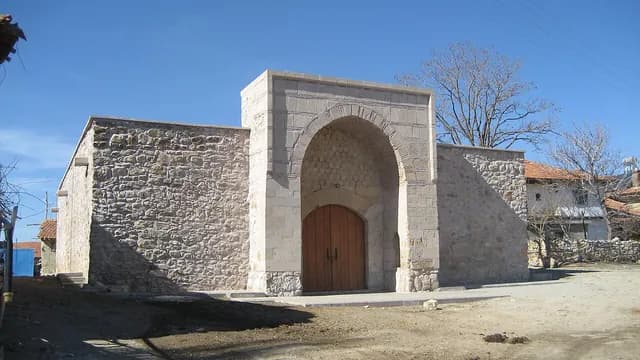
Çakırsaz Caravanserai
Altıntaş, Kütahya
A small 14th–15th-century caravanserai on the road between the Germiyan capital Kütahya and Afyonkarahisar.
 Machine translated — This content was machine-translated and may differ from the original Turkish text.
Nature park
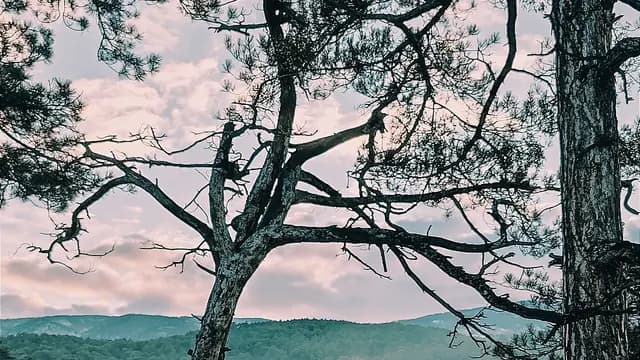
Çamlıca Nature Park
Merkez, Kütahya
A picnic and walking area in pine forest about 5 km west of the city center.
- Machine translated — This content was machine-translated and may differ from the original Turkish text.
Martyrs' memorial and battlefield
Cevizdere Martyrs' Memorial
Emet, Kütahya
A martyrs' memorial near Emet for the soldiers who fell in a War of Independence clash on September 3, 1922.
 Machine translated — This content was machine-translated and may differ from the original Turkish text.
Mosque
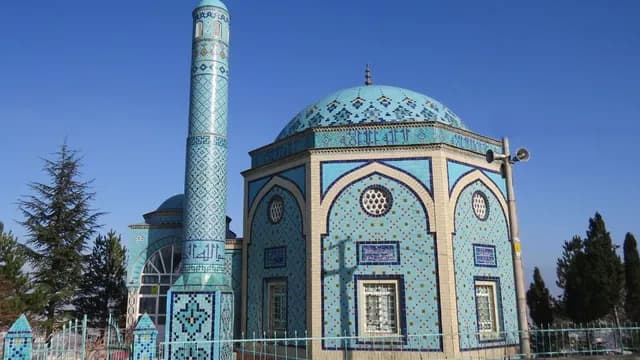
Çinili Mosque (Tiled Mosque)
Merkez, Kütahya
An octagonal mosque designed and built by the painter Ahmet Yakupoğlu, clad inside and out entirely in Kütahya tiles.
 Machine translated — This content was machine-translated and may differ from the original Turkish text.
Faith
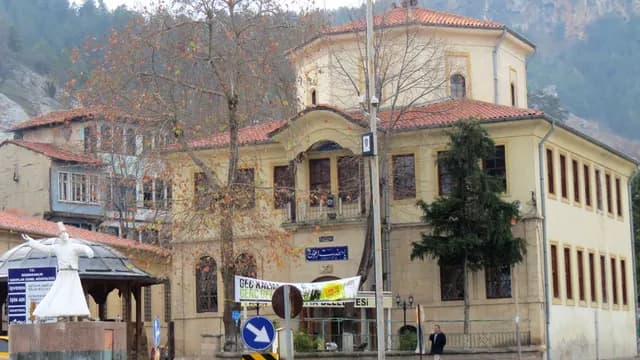
Dönenler Mosque (Erguniye Mevlevi Lodge)
Merkez, Kütahya
The semahane of the Kütahya Mevlevi Lodge, with origins going back to the 14th century; today used as the Dönenler Mosque.
 Machine translated — This content was machine-translated and may differ from the original Turkish text.
House museum
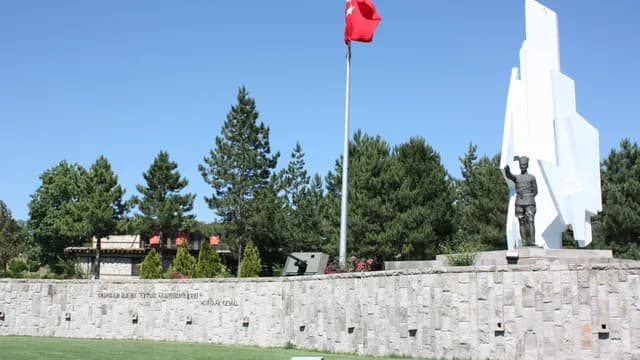
Dumlupınar Atatürk Headquarters House
Dumlupınar, Kütahya
A faithful reconstruction of the house Gazi Mustafa Kemal used as his headquarters during the Great Offensive.
 Machine translated — This content was machine-translated and may differ from the original Turkish text.
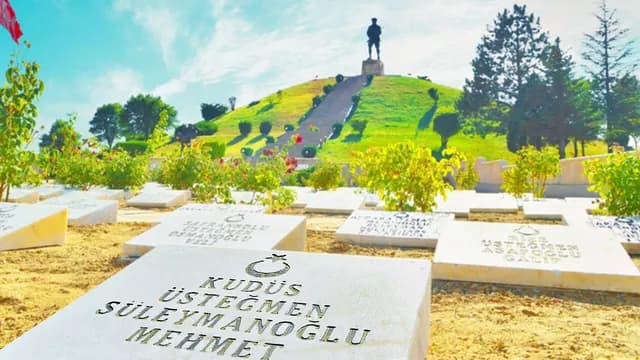
Martyrs' memorial and battlefield
Dumlupınar Martyrs' Cemetery
Dumlupınar, Kütahya
A martyrs' cemetery opened in 1992 for the soldiers who fell in the Battle of the Commander-in-Chief, within the Commander-in-Chief Historical National Park.
 Machine translated — This content was machine-translated and may differ from the original Turkish text.
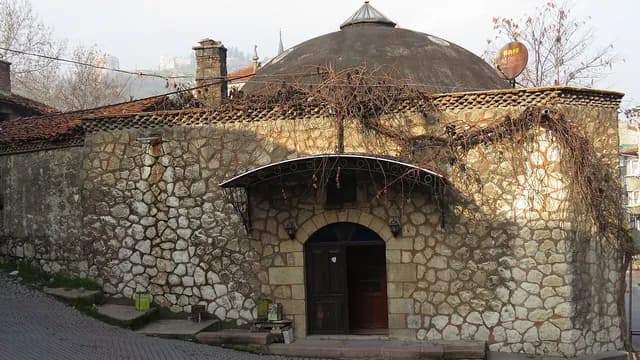
Hammam (Turkish bath)
Eğdemir Hammam (Elvan Bey Hammam)
Merkez, Kütahya
A historic bazaar hammam from the Germiyanoğulları period with a classic plan and a four-iwan hot room.
- Machine translated — This content was machine-translated and may differ from the original Turkish text.
Hot spring
Emet Hot Springs
Emet, Kütahya
Hot springs with sulfate and bicarbonate waters in Emet, declared a Thermal Tourism Center in 1993.
- Machine translated — This content was machine-translated and may differ from the original Turkish text.
Mosque
Emet Ulu Mosque (Babuk Bey Mosque)
Emet, Kütahya
A beylik-period work commissioned by Babuk Bey, son of Yakup Bey, in the Germiyanoğulları period; also known as the Çarşı Mosque.
 Machine translated — This content was machine-translated and may differ from the original Turkish text.
Nature park
Enne Dam Nature Park
Merkez, Kütahya
A nature park west of the city on the shore of the Enne Dam lake, offering picnics, walks and boat tours.
- Machine translated — This content was machine-translated and may differ from the original Turkish text.
Hot spring
Esire Hot Springs
Hisarcık, Kütahya
Thermal springs around Hamamköy in Hisarcık, favored especially for skin conditions.
 Machine translated — This content was machine-translated and may differ from the original Turkish text.
House museum
Evliya Çelebi House Museum (Culture and Art House)
Merkez, Kütahya
A historic Kütahya house believed to have belonged to the family of the traveler Evliya Çelebi, restored and turned into a museum.
 Machine translated — This content was machine-translated and may differ from the original Turkish text.
Hot spring
Eynal Hot Springs
Simav, Kütahya
A thermal area 5 km outside Simav whose geothermal water, above 160 °C, heats the district and its greenhouses.
 Machine translated — This content was machine-translated and may differ from the original Turkish text.
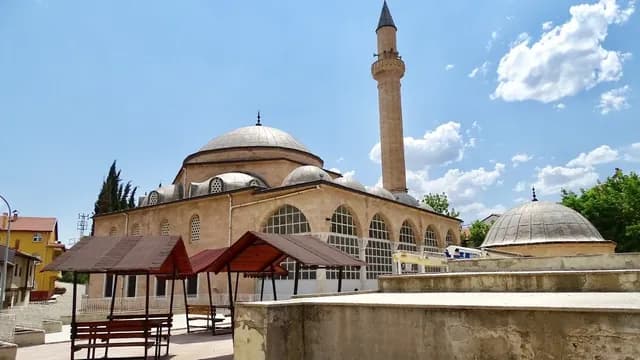
Mosque
Gediz Ulu Mosque (Gazanfer Ağa Mosque)
Gediz, Kütahya
A mosque commissioned in 1553 by Chief Harem Eunuch Gazanfer Ağa and faithfully rebuilt after the 1970 earthquake.
 Machine translated — This content was machine-translated and may differ from the original Turkish text.
Historic street and neighborhood
Germiyan Sokağı (Germiyan Street)
Merkez, Kütahya
A historic cobbled street in the Pirler neighborhood where 18th-century Kütahya houses are preserved as an ensemble.
- Machine translated — This content was machine-translated and may differ from the original Turkish text.
Hot spring
Göbel Hot Springs
Tavşanlı, Kütahya
The district's best-known thermal spring, in Göbel village a short drive from Tavşanlı.
- Machine translated — This content was machine-translated and may differ from the original Turkish text.
Campsite
Gölcük Yaylası Camping and Recreation Area
Simav, Kütahya
A tent and caravan area on the shore of a crater lake surrounded by pine forest, about 14 km from Simav.
 Machine translated — This content was machine-translated and may differ from the original Turkish text.
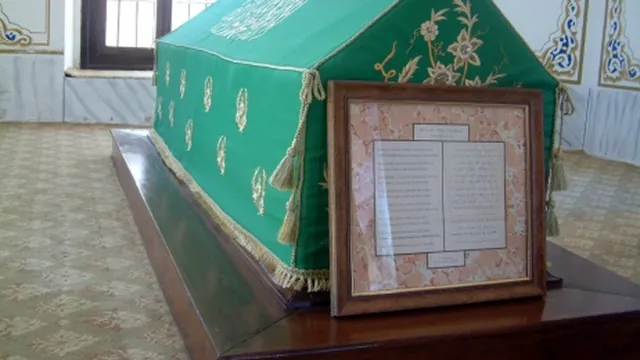
Tomb (türbe)
Hayme Ana Tomb
Domaniç, Kütahya
The tomb built by Abdülhamid II in 1892 for Hayme Hatun, the 'Devlet Ana', mother of Ertuğrul Gazi.
 Machine translated — This content was machine-translated and may differ from the original Turkish text.
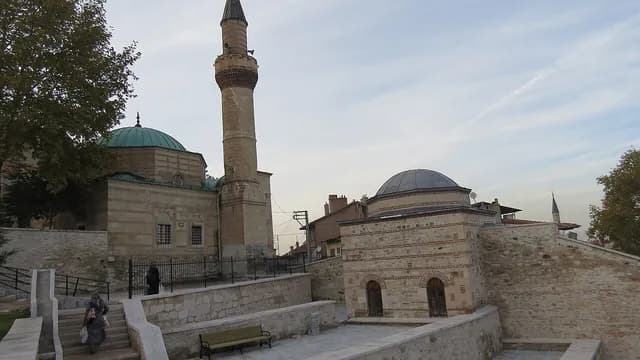
Mosque
İshak Fakih Mosque
Merkez, Kütahya
A mosque from the last period of the Germiyanoğulları, with a stone-and-brick facade dated 1433 and 15th-century tiles.
- Machine translated — This content was machine-translated and may differ from the original Turkish text.
Reservoir and pond
Kayaboğazı Dam Lake
Tavşanlı, Kütahya
The hill-ringed lake of a dam built on the Kocaçay between 1976–1987.
 Machine translated — This content was machine-translated and may differ from the original Turkish text.
House museum
Kossuth House Museum
Merkez, Kütahya
The 18th-century Kütahya house where the Hungarian freedom leader Lajos Kossuth lived in exile in 1850–51.
 Machine translated — This content was machine-translated and may differ from the original Turkish text.
Museum
Kütahya Archaeology Museum (Vacidiye Madrasa)
Merkez, Kütahya
An archaeology museum in the Vacidiye Madrasa, built in 1314 in the Germiyanoğulları period.
 Machine translated — This content was machine-translated and may differ from the original Turkish text.
Museum
Kütahya Tile Museum
Merkez, Kütahya
A museum displaying centuries of Kütahya tile-making in the soup kitchen built by the Germiyan Bey Yakup Bey II in 1411.
 Machine translated — This content was machine-translated and may differ from the original Turkish text.
Castle
Kütahya Castle
Merkez, Kütahya
A castle of Byzantine origin on a rocky hill commanding the city, surrounded by two rings of walls.
 Machine translated — This content was machine-translated and may differ from the original Turkish text.
Museum
Kütahya City History Museum
Merkez, Kütahya
A museum of the city's memory, created by combining two historic mansions on Germiyan Sokağı.
 Machine translated — This content was machine-translated and may differ from the original Turkish text.
Clock tower
Kütahya Clock Tower
Merkez, Kütahya
A tower converted from a church bell tower, demolished in the 1970s and faithfully rebuilt in 2005–2006.
 Machine translated — This content was machine-translated and may differ from the original Turkish text.
Mosque
Kütahya Ulu Mosque (Grand Mosque)
Merkez, Kütahya
The city's only sultan's mosque, begun when Yıldırım Bayezid was a prince and completed by his son Musa Çelebi.
 Machine translated — This content was machine-translated and may differ from the original Turkish text.
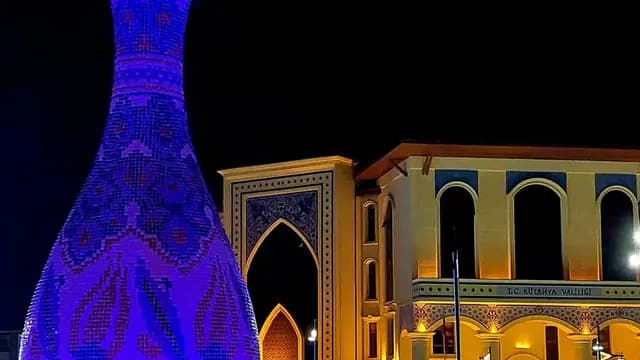
Monument and statue
Kütahya Vase Monument
Merkez, Kütahya
A giant vase on Zafer Meydanı in front of the governor's office, symbolizing the city's tile tradition.
 Machine translated — This content was machine-translated and may differ from the original Turkish text.
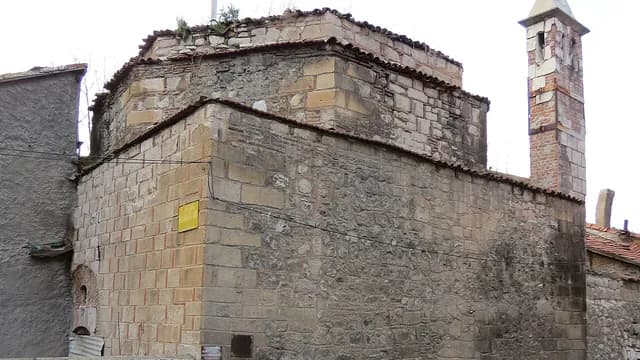
Hammam (Turkish bath)
Lala Hüseyin Paşa Hammam
Merkez, Kütahya
An Ottoman hammam built by Lala Hüseyin Paşa opposite his mosque to provide it with income.
 Machine translated — This content was machine-translated and may differ from the original Turkish text.
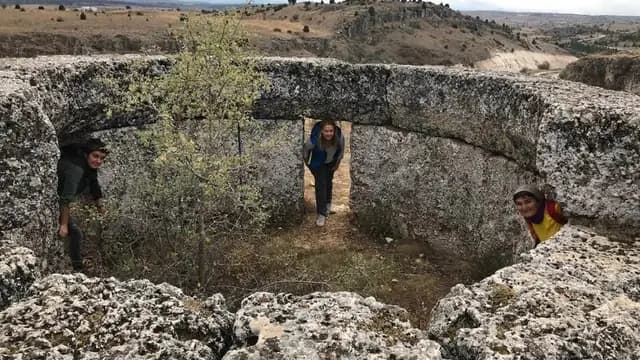
Faith
Sanctuary of Meter Steunene
Çavdarhisar, Kütahya
A rock and cave sanctuary southwest of Aizanoi, dedicated to the Mother Goddess.
- Machine translated — This content was machine-translated and may differ from the original Turkish text.
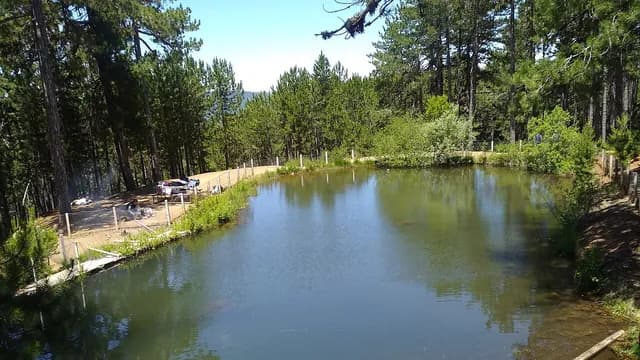
Monumental tree
Mızıkçam
Domaniç, Kütahya
A registered monumental black pine from whose branches, legend says, the infant Osman Gazi was rocked in a hanging cradle.
 Machine translated — This content was machine-translated and may differ from the original Turkish text.
Summit
Murat Dağı (Mount Murat)
Gediz, Kütahya
At 2,312 meters, the highest mountain of Kütahya and Uşak; a watershed whose waters drain to three different seas and a lake.
- Machine translated — This content was machine-translated and may differ from the original Turkish text.
Hot spring
Murat Dağı Thermal and Ski Area
Gediz, Kütahya
An area on the Gediz slope of Murat Dağı combining high-altitude thermal springs with ski slopes.
 Machine translated — This content was machine-translated and may differ from the original Turkish text.
Bridge
Penkalas Bridge
Çavdarhisar, Kütahya
A 2nd-century Roman bridge, still in use, crossing the Kocaçay near the Temple of Zeus.
 Machine translated — This content was machine-translated and may differ from the original Turkish text.
Madrasa and külliye (complex)
Rüstem Paşa Madrasa
Merkez, Kütahya
A madrasa commissioned by Grand Vizier Rüstem Paşa in 1550, partly demolished in the 1930s and rebuilt.
- Machine translated — This content was machine-translated and may differ from the original Turkish text.
Summit
Şaphane Dağı (Mount Şaphane)
Şaphane, Kütahya
One of the highest mountains in western Anatolia, reaching 2,120 meters at Ulugedik Tepesi, where the Gediz River rises.
 Machine translated — This content was machine-translated and may differ from the original Turkish text.
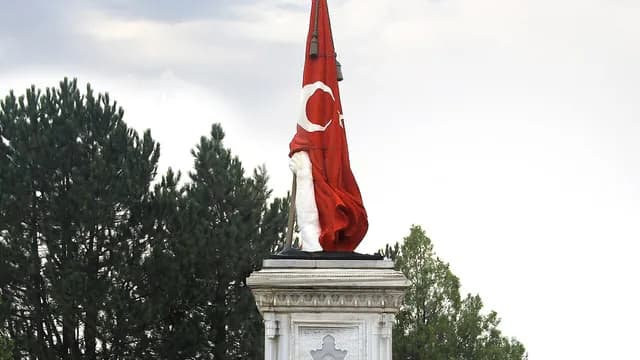
Monument and statue
Martyr Standard-Bearer Mehmetçik Monument
Altıntaş, Kütahya
A monument on Zafertepe erected in memory of a soldier who did not let go of his standard during the Great Offensive.
- Machine translated — This content was machine-translated and may differ from the original Turkish text.
Mosque
Simav Ulu Mosque (Grand Mosque)
Simav, Kütahya
Simav's oldest mosque, completed in 1425 and repaired in 1551 by Süleyman Çavuş, a master builder of Mimar Sinan.
- Machine translated — This content was machine-translated and may differ from the original Turkish text.
Mound (höyük)
Tavşanlı Mound
Tavşanlı, Kütahya
A large western Anatolian mound that looks heart-shaped from the air, bearing traces of about 8,000 years of settlement.
 Machine translated — This content was machine-translated and may differ from the original Turkish text.
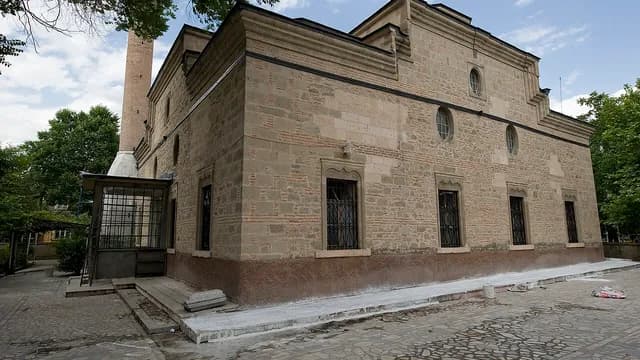
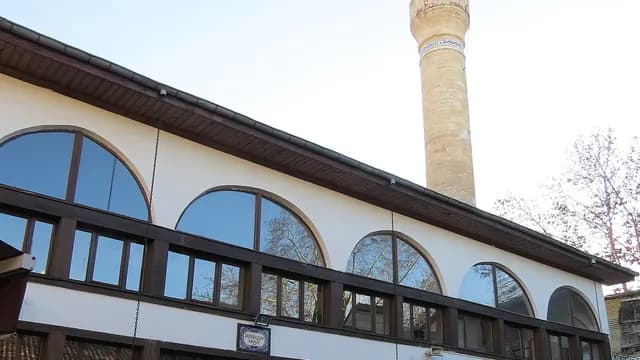
Mosque
Tavşanlı Ulu Mosque (Grand Mosque)
Tavşanlı, Kütahya
A mosque rebuilt in 1883 on the foundations of a mosque commissioned by Arslan Bey in the Germiyan period.
 Machine translated — This content was machine-translated and may differ from the original Turkish text.
Mosque
Timurtaş Paşa Mosque
Merkez, Kütahya
A mosque near the Küçük Bedesten, commissioned in 1389 by Sarı Timurtaş Paşa while he was warden of Kütahya.
- Machine translated — This content was machine-translated and may differ from the original Turkish text.
Nature park
Topuk Yaylası Nature Park
Domaniç, Kütahya
A nature park on the Domaniç–İnegöl road combining forest and lake ecosystems.
- Machine translated — This content was machine-translated and may differ from the original Turkish text.
Summit
Yellice Dağı (Mount Yellice)
Merkez, Kütahya
A flat-topped mountain massif just south of Kütahya, reaching 1,764 meters at İncebel Tepesi.
- Machine translated — This content was machine-translated and may differ from the original Turkish text.
Hot spring
Yoncalı Hot Springs
Merkez, Kütahya
A thermal spring area about 16 km from central Kütahya, favored for rheumatic conditions.
 Machine translated — This content was machine-translated and may differ from the original Turkish text.
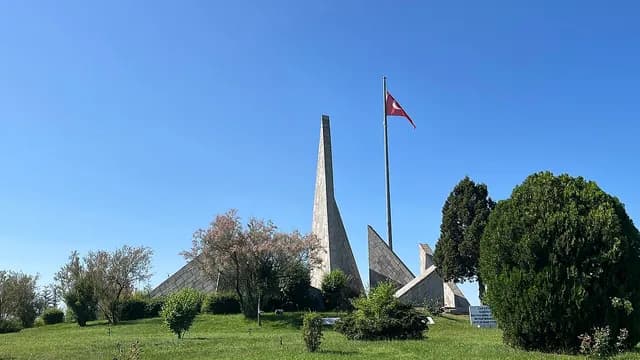
Monument and statue
Zafertepe Victory Monument
Altıntaş, Kütahya
An abstract victory monument on the 1,181-meter hill from which Atatürk directed the Battle of the Commander-in-Chief.
Practical information
Machine translated — This content was machine-translated and may differ from the original Turkish text.- Climate
- Transitional between continental and Mediterranean; summers are warm to hot, winters cold. The Gediz and Simav area is relatively mild.
- Best season
- May–October is the best period for touring; the hot springs can be visited in all four seasons, and winters are cold and snowy.
- Museum pass
- Müzekart (Museum Pass) is valid at the Aizanoi Archaeological Site and the Kütahya Archaeology and Tile museums.
- Getting there
- Zafer Airport (Altıntaş) serves Kütahya, Afyonkarahisar and Uşak; the city is on the Eskişehir–Balıkesir/İzmir railway line.
- Thermal tourism
- Kütahya is among the provinces with the most thermal tourism areas; Eynal, Emet, Esire, Yoncalı and Göbel are the main springs.